
Skip to Content
chevron-left chevron-right chevron-up chevron-right chevron-left arrow-back star phone quote checkbox-checked search wrench info shield play connection mobile coin-dollar spoon-knife ticket pushpin location gift fire feed bubbles home heart calendar price-tag credit-card clock envelop facebook instagram twitter youtube pinterest yelp google reddit linkedin envelope bbb pinterest homeadvisor angies

2026 Top Spunlace Non Woven Fabric Manufacturers

The 2026 market for Spunlace Non Woven Fabric is shaped by practical demands: softness, strength, absorbency, and dependable delivery. Buyers use these fabrics in wipes, hygiene products, medical textiles, and personal-care items. A sample may feel smooth in the hand, yet still fail when wet or under repeated handling. Small details matter.

Dr. Seshadri Ramkumar, a nonwovens researcher at Texas Tech University, has described nonwovens as “the fastest growing segment of the textile industry.” That observation helps frame this guide, but growth alone does not make a manufacturer the right fit. Production capacity, hydroentanglement control, fiber selection, quality testing, and clear technical documentation deserve close review. Ask how suppliers manage basis weight, tensile strength, and lot-to-lot variation. Request samples. Test them under real conditions.

This introduction to the 2026 Top Spunlace Non Woven Fabric Manufacturers will help readers compare capabilities rather than rely on broad claims. It considers product range, customization, delivery performance, and support for different applications. No ranking can capture every buyer’s needs. A large factory may offer scale, while a smaller producer may respond faster. I may be placing too much weight on consistency; for some buyers, price or lead time comes first. That is worth remembering. Industry information changes, so verify current specifications and certifications directly with each manufacturer before making a decision.
2026 Top Spunlace Non Woven Fabric Manufacturers

Understanding Spunlace Nonwoven Fabric and Its Production

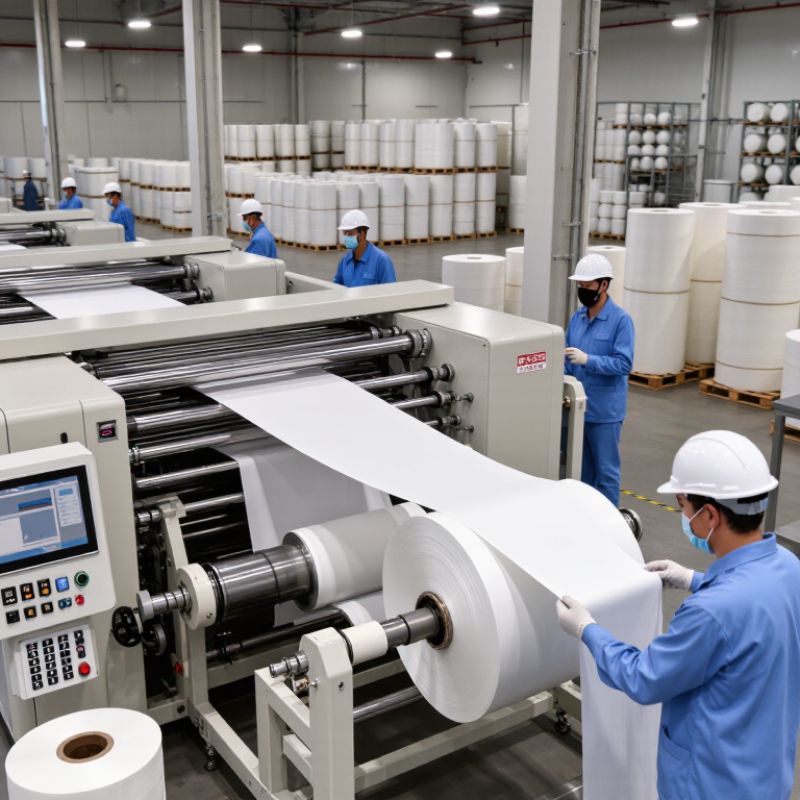
Spunlace nonwoven fabric is formed by mechanically entangling fibers with fine, high-pressure water jets. Unlike woven cloth, it has no interlacing yarns. Common fibers include viscose, polyester, and cotton, used alone or in blends. Fiber type, staple length, and web weight affect softness, strength, absorbency, and linting. On a production line, fibers are opened and spread into a loose web. Water jets then pass through the web, tangling fibers into a coherent sheet. No adhesive is required. The result can feel surprisingly cloth-like.

After entanglement, excess water is removed and the sheet is dried. Some products receive additional finishing, such as embossing or surface treatment, depending on their intended use. Manufacturers monitor web uniformity, tensile strength, absorbency, and appearance; small variations can matter in wiping or personal-care applications. The process is not magic. Water pressure, fiber blend, and line speed must work together, and one setting may not suit every product. A soft hand alone does not prove consistent quality. It is worth checking test results and intended-use specifications, since I once found a fabric’s feel was a poor guide to how well it held up when wet.

How Leading Manufacturers Are Evaluated in 2026

2026 Top Spunlace Non Woven Fabric Manufacturers

How Leading Manufacturers Are Evaluated in 2026

In 2026, evaluating a spunlace manufacturer means looking beyond price and production capacity. Buyers should examine fiber selection, hydroentanglement control, and consistency across production lots. Ask for test results covering basis weight, tensile strength, absorbency, and linting. A clean sample can look convincing; repeatable results matter more.

EDANA’s 2024 European nonwovens statistics reported approximately 2.8 million tonnes of production in 2023, down about 5.5% from the previous year. This figure covers nonwovens broadly, not spunlace alone, but it highlights why dependable delivery and flexible planning deserve scrutiny. Evaluate quality systems, traceability, water and energy monitoring, and the supplier’s ability to explain process changes. Request recent test records and compare samples from separate production runs. Small inconsistencies can become costly at scale.

Tips: Ask for the test method, not just the result. Confirm that samples match the intended end use, and check whether performance changes after storage. A minor weakness in documentation is easy to overlook, but it should prompt a follow-up question.

Profiles of Top Spunlace Nonwoven Fabric Manufacturers

Profiles of top spunlace nonwoven fabric manufacturers are best judged by how clearly they control production, not by broad claims. Strong producers can explain how fiber selection, web formation, and high-pressure water jets affect fabric strength and softness. They should also describe their available fiber blends, basis weights, roll widths, and finishing options. Specific answers matter.

A capable manufacturer typically offers samples and technical data for the intended use. Ask how it checks weight, tensile strength, absorbency, and appearance across production lots. Consistent records help buyers compare samples with delivered rolls. Traceability matters. Experienced teams can explain how line speed or fiber changes may alter the fabric, rather than promising identical results in every condition.

Manufacturing profiles also differ in scale and flexibility. Large facilities may suit repeat orders and steady specifications, while smaller operations may handle narrower runs or custom development. Neither is automatically better. Review production capacity, lead times, quality procedures, and communication before selecting a supplier. Sustainability claims deserve the same care: ask what materials and process data support them. A profile can look polished and still leave gaps. That is worth noticing.

Comparing Manufacturing Capabilities, Products, and Markets

A useful comparison of spunlace manufacturers starts with the line, not the brochure. Check hydroentanglement capacity, fiber options, basis-weight range, roll width, and finishing equipment. These details shape whether a mill can supply soft facial wipes, durable cleaning cloths, or low-lint medical materials. Ask for trial-roll data, not only catalog specifications.

Market context matters, but broad figures need careful reading. EDANA’s 2023 European Statistics reported 2.825 million tonnes of nonwoven production in Greater Europe, a 5.5% decline from 2022. This covers all nonwoven processes, not spunlace alone. It signals a more cautious regional market, rather than proving demand for any single product. Compare suppliers by their ability to adjust output, maintain consistent absorbency, and document quality across repeat orders.

Tips: Request samples at the target weight and width. Test wet strength, lint, and liquid uptake under your own use conditions. Also ask how the supplier manages water, energy, and production waste. One limitation remains: published capacity figures can look impressive, yet say little about delivery reliability during a busy season.

2026 Top Spunlace Non Woven Fabric Manufacturers - Comparing Manufacturing Capabilities, Products, and Markets

This comparison covers established spunlace product segments rather than ranking or identifying individual manufacturers. Company-level capacity, line configuration, and market-share figures are not consistently disclosed on a comparable basis.

Comparison dimension Hygiene and household wipes Personal care and beauty Medical and healthcare Industrial and specialty applications
Common product formats Dry and pre-moistened wipes, cleaning cloths, and general-purpose wiping substrates. Facial and cosmetic wipes, cleansing pads, and other skin-contact nonwoven substrates. Medical wipes, patient-care products, and selected materials used in healthcare settings. Cleaning and polishing cloths, filtration-related substrates, and other application-specific nonwovens.
Common fiber choices Polyester, viscose, and blends selected to balance strength, absorbency, and cost. Viscose and other cellulosic fibers, polyester, or blends chosen for softness and liquid handling. Polyester, viscose, and blends; material selection depends on the product’s intended use and requirements. Polyester, viscose, and specialty fibers selected for the required strength, surface, or functional properties.
Relevant manufacturing capabilities Consistent web formation, hydroentanglement, drying, converting, and control of wipe performance. Soft hand feel, uniform appearance, reliable absorbency, and converting into finished formats. Controlled production, traceability, and product-specific quality systems; regulatory requirements depend on the finished product and market. Flexible material formulation, application-specific testing, and the ability to tailor surface and mechanical properties.
Typical performance priorities Absorbency, wet and dry strength, lint control, and compatibility with the intended cleaning task. Softness, skin feel, absorbency, and compatibility with cosmetic or cleansing formulations. Cleanliness, strength, low lint where required, and compliance with the applicable product specifications. Durability, abrasion performance, absorbency or filtration performance, depending on the application.
Main customer markets Consumer-goods producers, retailers, institutional cleaning suppliers, and contract converters. Personal-care brands, cosmetic product manufacturers, and private-label converters. Healthcare product manufacturers, medical distributors, and institutional care suppliers. Industrial distributors, manufacturers, cleaning-service suppliers, and specialized converters.
Important buying checks Substrate consistency, formulation compatibility, converting performance, and applicable local requirements. Skin-contact suitability, softness consistency, ingredient compatibility, and finished-product testing. Intended-use classification, documented quality controls, traceability, and applicable regulatory compliance. Application-specific test data, durability, process compatibility, and consistency between production lots.
Capacity and market-share data Not directly comparable without manufacturer-specific, independently verified disclosures. Not directly comparable without manufacturer-specific, independently verified disclosures. Not directly comparable without manufacturer-specific, independently verified disclosures. Not directly comparable without manufacturer-specific, independently verified disclosures.

Key Factors for Selecting a Spunlace Fabric Supplier

Selecting a spunlace supplier starts with the intended use, not a glossy sample. For wipes, compare absorbency, wet strength, lint, and lotion compatibility using the same test method. Ask for fiber composition, basis-weight tolerances, and documented process controls. EDANA and INDA’s Global Nonwovens Markets report recorded 13.9 million tonnes of global nonwoven production in 2022, 2.1% above 2021. That scale signals a broad supply base, not equal quality. Details matter.

Check test results in both machine and cross directions; a roll may look even yet tear unevenly. Request recent tensile-strength, absorbency, and lint data, then compare them with samples from production. ISO 9073 methods offer a useful framework for testing nonwovens, but confirm each method fits your product. Ask about fiber sourcing, water recirculation, downtime, and lot traceability; these can affect consistency as much as price. A tidy certificate is not a stable production run. Before a large order, test a pilot batch through converting and packaging. Samples can hide variation.

2026 Top Spunlace Nonwoven Fabric Manufacturers: Key Supplier Selection Factors

Typical spunlace basis-weight specifications by application. Use these reference ranges to discuss product fit with suppliers; actual requirements vary by end use and should be confirmed against technical data sheets and testing.

When comparing suppliers, verify basis-weight tolerance alongside fiber composition, tensile strength, absorbency, linting, and applicable compliance requirements. The ranges shown are indicative, not a universal specification.