2026 Best Types of Wood Panels for Global Buyers?
Choosing the best Wood Panels in 2026 requires more than comparing prices or surface finishes. Global buyers must examine moisture exposure, structural demands, indoor air quality, certification, transport conditions, and local installation skills. A panel that performs well in a dry Scandinavian apartment may fail in a humid coastal warehouse. Small details matter. Edge sealing, core density, formaldehyde classification, and pallet protection can change the final result.
Dr. Robert H. Falk, a respected wood-products researcher, stated, “The right panel is never chosen by price alone; it is chosen by performance, environment, and use.” This principle remains practical for buyers evaluating plywood, oriented strand board, medium-density fiberboard, particleboard, and laminated panels. Each option offers a different balance of strength, stability, appearance, machinability, and cost. Plywood may suit demanding construction. MDF can provide a smoother surface for painted furniture. OSB may offer efficient structural performance, but moisture control cannot be ignored.
This guide compares the leading types of Wood Panels for international purchasing decisions. It considers real supply-chain concerns, including container humidity, inconsistent grading, delayed certification, and unclear product specifications. Not every recommendation will fit every market. That limitation matters. Buyers should verify technical data, test reports, and applicable standards before placing large orders. A beautiful sample is not enough. The panel must still perform after weeks in transit, repeated cutting, and daily use.
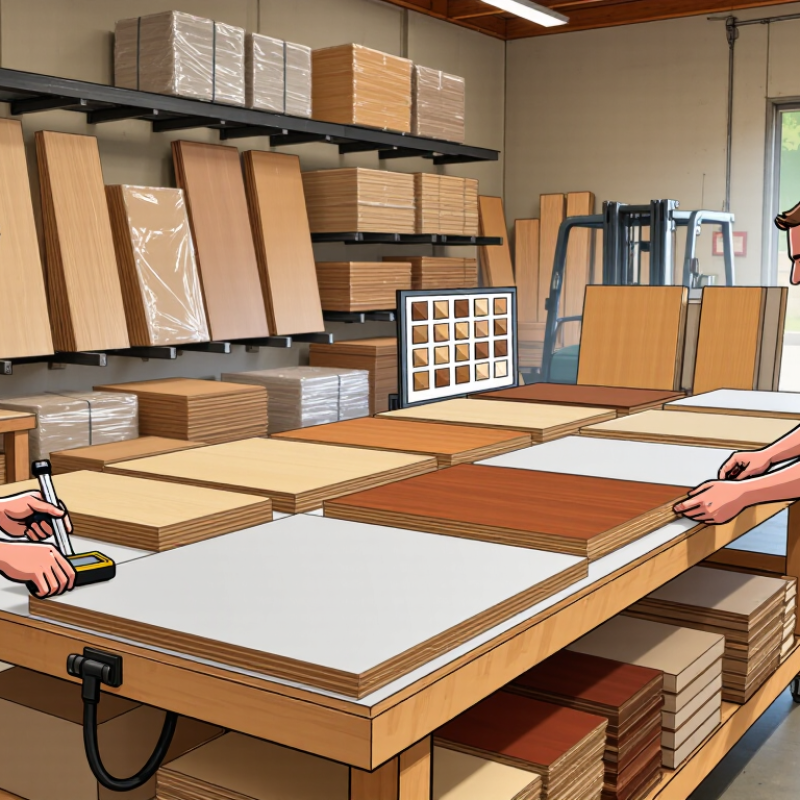
What Are Wood Panels and Why Do Global Buyers Need Them?
What Are Wood Panels and Why Do Global Buyers Need Them?
Wood panels are flat products made from solid timber, veneers, strands, or refined wood fibers. Common types include plywood, medium-density fiberboard, oriented strand board, and laminated panels. Each type behaves differently under pressure, humidity, heat, and repeated use.
Global buyers need wood panels for furniture, interiors, construction, doors, and transport fixtures. Their wide surfaces support faster installation and more consistent production. Plywood offers strong layered performance. MDF provides a smooth face for painting and machining. OSB can deliver practical structural strength. However, no panel fits every project. Moisture exposure, edge quality, screw holding, and surface finish must be checked carefully.
Tips:
Request technical datasheets, test reports, and sample panels before ordering. Confirm thickness tolerance, formaldehyde emissions, moisture resistance, and applicable destination standards. Inspect packaging for crushed corners or swollen edges. A low price can look attractive. It may hide poor calibration or unstable raw materials. I have learned that supplier claims need evidence, not confidence alone. Also, species, adhesive chemistry, and core construction can affect performance significantly. Small differences become expensive during large-scale production. 絲襪
Which Wood Panel Types Are Available in 2026?
In 2026, global buyers can choose from plywood, MDF, particleboard, OSB, veneer panels, and engineered structural boards. Each type serves a different purpose. Plywood offers layered strength for furniture, walls, and transport interiors. MDF has a smooth surface for painted doors and detailed machining. Particleboard remains a cost-conscious option for indoor furniture, but it needs careful moisture protection.
OSB provides strong, directional performance for construction applications. Veneer panels add natural grain while using a stable engineered core. Laminated veneer lumber supports heavier structural work, especially where straight, reliable sections matter.
Bamboo panels are also considered by some buyers seeking rapidly renewable materials. However, availability, treatment quality, and import requirements vary by region. A low price can hide uneven thickness or weak edge bonding.
Tips: Request samples before ordering. Check thickness tolerance, density, moisture resistance, formaldehyde emissions, and surface quality. Ask for test reports and legally recognized forestry documentation when responsible sourcing matters. For humid climates, inspect swelling data rather than trusting general labels. I have found that photographs often miss small surface defects. Samples reveal more. Buyers should also confirm packaging, container loading, and storage guidance. One specification rarely fits every market, and that assumption deserves a second look.
How Do Core Materials Affect Panel Performance?
Core materials often decide whether a wood panel survives real-world use. Particleboard offers an economical, smooth surface for furniture and interior fittings. Its performance depends on density, resin distribution, and edge sealing. In a damp warehouse, unprotected edges can swell quickly. That detail is easy to underestimate.
Medium-density fibreboard machines cleanly and accepts paint with a consistent finish. It suits cabinet doors, wall panels, and shaped components. However, standard grades are not ideal near persistent moisture. Moisture-resistant fibreboard improves stability, but it still needs correct installation. I have seen panels fail because installers sealed the face but ignored cut edges. Small mistake. Large repair.
Plywood uses crossed veneers to improve strength and dimensional stability. It often performs better where screws, impact, or changing humidity matter. Veneer quality, bonding, and layer arrangement affect results, not thickness alone. Lightweight core panels reduce handling effort, yet their skins must resist denting and delamination. Global buyers should compare test data, formaldehyde limits, moisture ratings, and tolerance records. Request samples, then test drilling, fastening, and edge exposure under local conditions. Laboratory figures are valuable, but they cannot replace jobsite judgment. Cost comparisons are often too narrow; replacement labor may outweigh the original panel price.
2026 Best Types of Wood Panels for Global Buyers?
How Do Core Materials Affect Panel Performance?
Panel density is a practical indicator of shipping weight, handling effort and screw-holding potential. MDF and particleboard are generally denser because they are made from refined fibers or wood particles, while plywood, OSB and LVL use aligned veneers or strands to deliver efficient structural performance at moderate density.
Values shown are representative typical densities in kg/m³ and can vary by species, grade, moisture content, adhesive system and manufacturing standard. Buyers should confirm certified technical data for the intended application.
How Should Buyers Compare Quality, Cost, and Sustainability?
For global buyers in 2026, wood panel selection starts with the project, not the catalog.
Plywood suits load-bearing furniture and humid interiors when veneers are well bonded. MDF offers a smooth surface for painted doors, while OSB can reduce structural cost. Solid wood panels provide repairability, but they may move with seasonal humidity.
Ask for panel density, thickness tolerance, core construction, and moisture resistance.
Small details matter. A 12-millimeter panel with uneven edges can create costly installation waste.
Compare quality through physical samples and independent test reports. Check screw holding, bending strength, surface defects, and formaldehyde emissions. Do not rely on a single certificate. Match test methods to the destination market and intended use.
Request production-batch records, inspection photos, and clear packaging details. A reliable supplier should explain failed tests, not hide them.
That standard sounds demanding. It prevents expensive surprises. Yet laboratory data cannot show every problem; installers may still find warping after transport.
Cost should include cutting loss, freight volume, storage, finishing, and replacement risk. A cheaper board may become expensive after swelling or delamination.
Sustainability needs a wider comparison. Review wood origin, recycled content, resin chemistry, durability, and end-of-life options. Certified sourcing can strengthen traceability, but buyers should verify scope and validity.
Lighter panels may lower shipping emissions, although weaker construction can shorten service life. I would record each trade-off instead of chasing one perfect score. Real purchasing decisions are rarely clean.