Best Wood Windows Manufacturers in China?
Choosing the best wood windows manufacturers in China requires more than comparing catalog prices. Quality appears in the details: kiln-dried timber, precise corner joints, stable coatings, and accurate glazing installation. A polished showroom cannot replace evidence from production and testing.
This guide examines Chinese manufacturers through practical sourcing criteria. It considers timber species, moisture control, machining accuracy, hardware options, and customization capabilities. Factory experience matters, especially when projects require slim profiles, large glass panels, or historically styled frames. Buyers should request product samples, technical drawings, applicable test reports, and clear warranty terms. These documents help confirm performance instead of relying on attractive claims.
Look closely at the workshop. Is timber stored indoors and measured with moisture meters? Are finished frames checked for warping, drainage, and coating consistency? Ask how the manufacturer manages packaging and international delivery. A damaged corner can ruin an otherwise excellent window.
No supplier is perfect.
Price differences may reflect timber grades, labor, coatings, or testing costs. The lowest quotation can become expensive after revisions and replacement shipments. Still, higher prices do not automatically prove superior quality. That is an important limitation in any manufacturer comparison. Reliable decisions come from factory audits, sample approval, independent inspections, and direct communication with technical teams. This introduction sets the scope for evaluating the best wood windows manufacturers in China with a balanced, evidence-based approach.
Wood Window Manufacturing in China: Materials, Design Types, and Market Scope
Best Wood Windows Manufacturers in China?
China’s wood window sector combines local timber processing with export-oriented fabrication. The FAO Global Forest Resources Assessment 2020 records about 220 million hectares of forest in China. Responsible manufacturers should still verify legal sourcing, moisture content, and chain-of-custody documents.
Kiln-dried pine, larch, oak, and engineered laminated wood are common choices. Engineered sections reduce warping, although poor bonding can still cause failure.
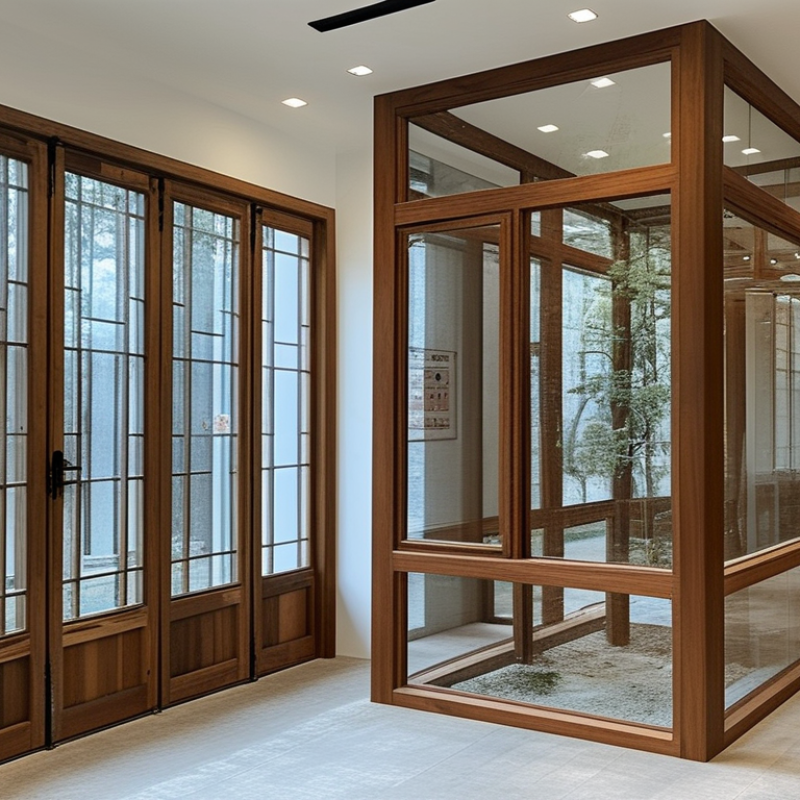
Design options cover traditional inward-opening casements, tilt-and-turn systems, sliding windows, bay windows, and wood-aluminum hybrids.
Triple glazing suits colder regions, while low-emissivity double glazing often fits milder climates. Buyers should request tested U-values, air leakage results, water resistance data, and coating specifications. Factory samples matter. A beautiful corner joint may hide uneven sealing.
The market scope extends beyond new housing. China’s Ministry of Housing and Urban-Rural Development reported renovation activity across more than 50,000 old residential communities in 2023. These projects create demand for replacement windows, improved insulation, and historically sensitive designs.
Custom villas and hospitality projects add higher-margin opportunities. Yet quality varies between workshops. Some suppliers present strong catalogs but weak testing records. Independent inspection remains necessary, especially for moisture control, hardware alignment, and packaging damage.
Evaluate Chinese Manufacturers by U-Value, Air Leakage, and Water-Tightness Data
Best Wood Windows Manufacturers in China?
A serious comparison starts with verified performance data, not factory photographs. Request U-value reports tested under NFRC 100 or EN ISO 10077 procedures. Lower U-values indicate better insulation. For many high-performance wood windows, a whole-window U-value near 0.25–0.30 Btu/h·ft²·°F is a practical benchmark, although climate and glazing design change the result. LBNL’s WINDOW database shows how frame material, spacer design, and glass coatings can alter calculated thermal performance.
Air leakage needs equal attention. Ask for results at 75 Pa, or 1.57 psf, using NFRC 400 or ASTM E283 methods. A rating near 0.10–0.20 cfm/ft² is strong for residential windows. Do not accept only “airtight” claims. The report should identify specimen size, opening type, and test pressure. Small samples can make performance look better than real installations.
Water-tightness testing reveals another weakness. Under ASTM E331 or EN 12208, higher pressure resistance suggests better protection against wind-driven rain. A 300 Pa result is useful, while severe coastal projects may require more. Check whether the test used operable windows, corner joints, and actual hardware. A certificate alone is not enough. I would also compare factory quality records, batch traceability, and independent laboratory credentials. Some data may be incomplete or poorly translated. That deserves questions, not automatic rejection. Manufacturers willing to disclose raw results usually inspire greater confidence.
Best Wood Windows Manufacturers in China? – Evaluate Chinese Manufacturers by U-Value, Air Leakage, and Water-Tightness Data
Anonymized technical benchmark profiles for comparing wood and wood-aluminium window performance. Lower Uw values indicate better thermal insulation.
| Reference Profile |
Frame Construction |
Glazing Configuration |
Reference Window Size |
Uw Value |
Air Leakage |
Air-Tightness Class |
Water-Tightness |
Water-Tightness Class |
Evaluation Notes |
| Profile A |
78 mm laminated softwood frame; double rebate seal |
Triple insulating glass, 4–16Ar–4–16Ar–4; low-emissivity coatings; warm-edge spacer |
1.23 × 1.48 m |
0.82 W/m²K |
0.20 m³/(h·m²) at 100 Pa |
Class 4 |
600 Pa |
9A |
Very strong overall performance; suitable for low-energy building specifications when installation is properly detailed. |
| Profile B |
92 mm laminated softwood frame; triple perimeter gasket |
Triple insulating glass, 4–18Ar–4–18Ar–4; low-emissivity coatings; argon fill |
1.23 × 1.48 m |
0.76 W/m²K |
0.16 m³/(h·m²) at 100 Pa |
Class 4 |
750 Pa |
E750 |
Best thermal result in this benchmark; verify frame moisture protection and long-term coating durability. |
| Profile C |
78 mm laminated hardwood frame; double compression seal |
Triple insulating glass, 4–16Ar–4–16Ar–4; low-emissivity coatings; composite spacer |
1.23 × 1.48 m |
0.88 W/m²K |
0.24 m³/(h·m²) at 100 Pa |
Class 4 |
600 Pa |
9A |
Balanced thermal, air, and rain resistance; hardwood frame can provide high mechanical stability when correctly engineered. |
| Profile D |
68 mm laminated softwood frame; double weather seal |
Double insulating glass, 4–16Ar–4 low-emissivity unit; warm-edge spacer |
1.23 × 1.48 m |
1.22 W/m²K |
0.28 m³/(h·m²) at 100 Pa |
Class 4 |
450 Pa |
8A |
Practical mid-range specification; generally more appropriate for moderate climates than ultra-low-energy projects. |
| Profile E |
78 mm wood-aluminium frame; protected exterior aluminium cladding |
Triple insulating glass, 4–18Ar–4–18Ar–4; low-emissivity coatings; warm-edge spacer |
1.23 × 1.48 m |
0.84 W/m²K |
0.18 m³/(h·m²) at 100 Pa |
Class 4 |
750 Pa |
E750 |
Strong rain resistance and reduced exterior maintenance; inspect the aluminium drainage and timber-to-metal interface. |
| Profile F |
92 mm wood-aluminium frame; triple perimeter seal |
Triple insulating glass, 4–20Ar–4–20Ar–4; low-emissivity coatings; argon fill |
1.23 × 1.48 m |
0.79 W/m²K |
0.14 m³/(h·m²) at 100 Pa |
Class 4 |
900 Pa |
E900 |
Highest air and water resistance in this reference set; confirm the certified test size and hardware configuration. |
Technical basis: Uw values are representative whole-window values calculated or tested for the stated reference size and glazing configuration. Air-tightness classes refer to EN 12207, while water-tightness classifications refer to EN 12208. Actual performance can change with window dimensions, opening type, hardware, glazing spacer, installation method, drainage design, and test laboratory. Manufacturer comparison should use independently issued laboratory reports for the exact product configuration.
Verify CE, FSC, ISO 9001, and EN 14351-1 Compliance Before Comparing Suppliers
Best Wood Windows Manufacturers in China?
When comparing wood window manufacturers in China, compliance should come before price, finish, or delivery promises. Ask for current CE documentation linked to EN 14351-1. Check whether the document covers the exact window type, opening style, and performance class you require. A logo on a brochure proves very little.
Look for an FSC certificate with a valid certificate number and matching company details. Confirm that the certificate covers the supplied timber products, not only office procedures. ISO 9001 can show a controlled quality system, but it does not certify window performance. This difference is often overlooked.
Request the certification scope, issuing body, expiry date, and factory address. Then compare them with the quotation and production site.
Do not rely on scanned certificates alone. Request test reports, declarations of performance, timber species information, moisture records, and sample inspection results. Check seals, corner joints, drainage paths, glazing compatibility, and coating thickness on a physical sample. A factory may provide excellent samples but deliver inconsistent batches. That risk deserves attention. Independent verification can expose gaps before a deposit is paid. It is also sensible to confirm whether EN 14351-1 testing applies to the finished configuration, rather than a similar model. Supplier comparison becomes clearer when every document matches the product, factory, and intended market.
Compare Leading Chinese Wood Window Makers by Customization, Capacity, and Warranty
Best Wood Windows Manufacturers in China?
Chinese wood window manufacturers differ sharply in customization, production capacity, and warranty support. A capable factory can adjust frame depth, sash dimensions, glazing bars, timber species, and exterior finishes. Ask for full-size corner samples, not only polished catalog images. The sample should show joints, drainage paths, paint coverage, and hardware alignment. European oak, pine, and engineered timber offer different costs and stability. Custom colors are possible, but unusual finishes may increase lead times. Small workshops often handle complex designs well. Larger factories usually provide steadier output for hotel or housing projects.
Capacity should be checked through machinery, staffing, and recent shipment records. Request production photos with visible dates and project references. A factory may claim high monthly output, yet its finishing line can remain the bottleneck. That detail matters. Confirm how many windows can be produced each month without reducing inspection standards. Reliable suppliers should explain moisture control, timber lamination, glass installation, and packaging procedures. Third-party test reports for air leakage, water resistance, and wind pressure add useful evidence, especially for demanding climates.
Warranty terms need careful reading. Many Chinese suppliers offer five to ten years for frames or coatings, but coverage varies by component. Hardware, glass seals, paint fading, and installation errors may receive different treatment. Ask who pays for replacement parts and how claims are documented. Keep approved drawings, finish samples, inspection records, and packing lists. A longer warranty is not automatically stronger. Response time and spare-part access often reveal more. Some promises look reassuring, but contract wording may remain vague. That is where buyers should slow down.
This benchmark compares common procurement priorities for Chinese wood-window suppliers rather than presenting company-specific data. Customization and production capacity use a 1–5 evaluation scale; warranty coverage is shown in years. Actual specifications should be confirmed in each supplier’s technical proposal and warranty document.
Select the Best Manufacturer Using U-Values Below 1.0 W/m²K and Lifecycle Cost
Choosing the best wood window manufacturer in China requires more than comparing timber species or factory photos. Ask for tested whole-window U-values below 1.0 W/m²K, not only center-glass results. A credible supplier should provide laboratory reports, spacer details, frame dimensions, and installation conditions.
Look closely at the construction. Triple glazing, warm-edge spacers, continuous gaskets, and properly dried timber can reduce heat loss near the frame. Request samples before placing a large order.
Check corner joints, drainage channels, coating thickness, and hardware movement. Small defects often become expensive problems after repeated winter cycles.
Lifecycle cost matters more than the purchase price. Compare energy savings, repainting intervals, replacement seals, repair access, shipping protection, and warranty support over twenty years. A cheaper window may require earlier refinishing or create condensation risks.
I have learned that a low U-value alone can mislead. Installation quality may decide the real result. Ask the manufacturer for project references in similar climates and written maintenance guidance.
Some evaluations remain incomplete because they ignore labor costs and future glass replacement. That gap deserves attention.