
Skip to Content
chevron-left chevron-right chevron-up chevron-right chevron-left arrow-back star phone quote checkbox-checked search wrench info shield play connection mobile coin-dollar spoon-knife ticket pushpin location gift fire feed bubbles home heart calendar price-tag credit-card clock envelop facebook instagram twitter youtube pinterest yelp google reddit linkedin envelope bbb pinterest homeadvisor angies

How to Choose Smoke Shop Shelves for Your Store?

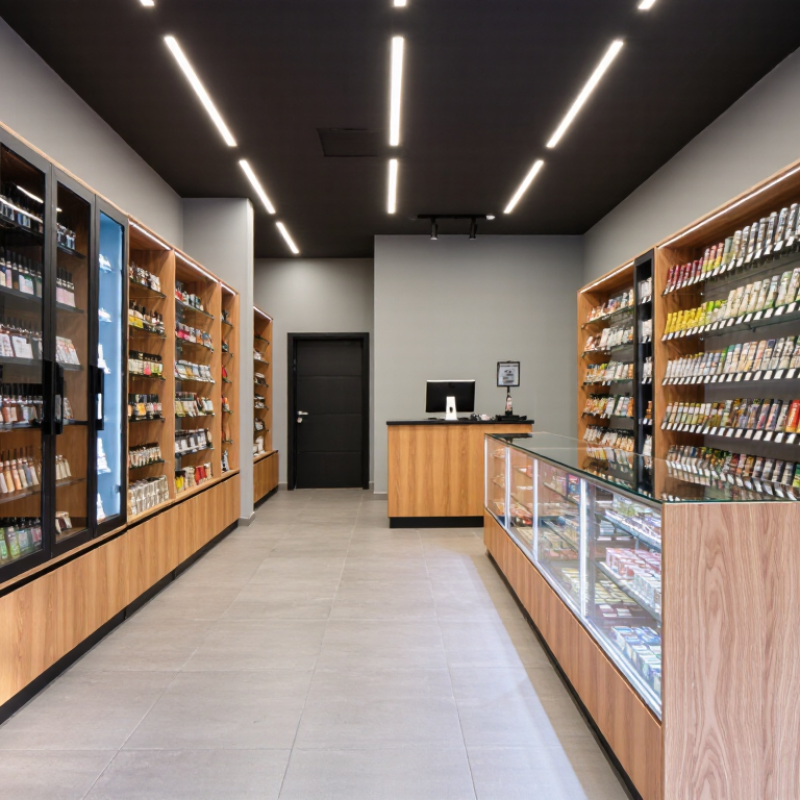
Choosing smoke shop shelves is not simply a matter of filling empty walls. The right fixtures must support clear presentation, safe customer movement, efficient restocking, and a professional shopping environment for lawful, age-restricted products and accessories. A shelf that looks attractive may still create glare, wasted corners, or difficult cleaning. Small details matter.

The 2024 Deloitte Global Powers of Retailing report highlights operational efficiency and customer experience as major retail priorities. The National Retail Federation’s 2024 retail outlook also forecasts continued pressure on retailers to protect value and improve store performance. These findings apply directly to shelf planning. Every shelf should earn its space. Adjustable levels, lockable glass sections where appropriate, durable laminate, and bright but controlled lighting can improve visibility without creating visual clutter. Keep frequently handled items within comfortable reach. Leave enough aisle width for easy movement.

Paco Underhill, founder of Envirosell and a recognized retail-behavior expert, wrote in Why We Buy, “What people touch, they buy.” That principle helps explain why product accessibility, shelf height, and clean presentation deserve careful testing. However, customer behavior varies by location, store size, and product mix. I may overvalue visual design if I ignore staff workflow. A practical plan should combine sales data, employee feedback, and direct observation. Measure twice. Adjust after opening. The best smoke shop shelves are not the most expensive ones; they are the fixtures that make lawful merchandise easier to see, compare, replenish, and manage.
How to Choose Smoke Shop Shelves for Your Store?

Understanding Your Store’s Display and Storage Requirements

How to Choose Smoke Shop Shelves for Your Store?

Understanding Your Store’s Display and Storage Requirements

Choosing shelves begins with understanding how your store actually operates. Measure wall length, ceiling height, aisle width, and counter space before buying fixtures. A shelf that looks attractive online may block customer movement in a narrow shop. I once selected deep shelving for a small retail space, and it made restocking awkward. The mistake was useful.

Consider what customers need to see clearly. Adjustable shelves can display different product sizes without creating empty gaps. Keep frequently purchased legal retail items between eye and hand level. Use deeper shelves for reserve stock, but avoid hiding products behind the front row. Clear labels, even lighting, and clean surfaces help customers compare items confidently.

Storage requirements deserve equal attention. Lockable cabinets may protect higher-value merchandise and support responsible inventory control. Closed sections can reduce dust, while open shelves improve visibility. Choose durable, easy-to-clean materials that tolerate daily handling. Check weight limits carefully. Shelves should remain stable when fully loaded.

Plan for restocking, cleaning, and accessibility, not only appearance. Leave enough room for staff to turn safely with cartons. Follow local building, accessibility, and fire-safety requirements. These details are easy to overlook during a rushed renovation. Measure twice, then test one shelf in the real store before installing a complete wall.

Choosing Shelving Materials for Durability, Safety, and Maintenance

How to Choose Smoke Shop Shelves for Your Store?

Choosing Shelving Materials for Durability, Safety, and Maintenance

The shelf material shapes your store’s daily performance. Powder-coated steel handles frequent use and supports heavier packaged products. It also resists scratches better than many painted surfaces. However, cheap coatings can chip around screw holes. Inspect the finish before installation.

Tempered glass creates a clean, open appearance and improves product visibility. Choose thick panels with polished edges and secure supports. Never rely on glass alone for heavy displays. A small impact can still cause damage. Wood laminate offers warmth and flexible colors, but exposed edges may swell during cleaning. Use sealed edges and wipe spills quickly.

Safety deserves practical attention. Select shelves with clear load ratings, rounded corners, and stable wall anchoring. Adjustable systems help when product sizes change, although loose brackets can become irritating during busy hours. Maintenance is easier when surfaces have few grooves and tolerate mild cleaners. Test one shelf before ordering the whole set. This simple step may reveal glare, wobbling, or difficult access. I once underestimated cleaning time in a retail layout, and the problem became obvious only after opening.

A durable material is useful, but easy maintenance often matters more.

Planning Shelf Sizes, Layout, and Product Accessibility

How to Choose Smoke Shop Shelves for Your Store?

Planning Shelf Sizes, Layout, and Product Accessibility

Choosing shelves starts with measuring the store, not browsing attractive fixtures. Record wall lengths, ceiling height, door clearance, and customer walking paths. A 30-centimeter shelf depth often suits small packaged goods without blocking movement. Larger items need deeper shelves, but excessive depth can hide products.

Keep everyday items between waist and eye level. Place heavier products on lower shelves to reduce falling risks. Use adjustable shelving when product sizes change throughout the year. Leave enough space between sections for clear category separation. Customers should reach products without stretching or moving nearby displays. Keep it simple.

My first store layout looked efficient, but it felt crowded during busy hours. I had measured the shelves, not the people. That mistake taught me to test each aisle with a basket and two customers. A practical minimum walkway may vary by local building rules and store conditions, so verify requirements before installation.

Use strong, stable materials with smooth edges and easy-clean surfaces. Check anchors, brackets, and shelf load ratings regularly. Good lighting should remove shadows without creating glare on packaging. Keep pricing and product information visible at the point of selection. Accessibility matters too; avoid placing essential information only on high shelves. Leave some flexibility for seasonal displays, because a perfect plan rarely stays perfect.

How to Choose Smoke Shop Shelves for Your Store? — Planning Shelf Sizes, Layout, and Product Accessibility
Product or Zone Recommended Shelf Type Typical Shelf Depth Recommended Shelf Spacing Suggested Display Height Planning and Accessibility Guidance
Small packaged accessories Adjustable wall shelving with front lips or dividers 8–12 in (20–30 cm) 10–14 in (25–36 cm) 36–60 in (91–152 cm) Use dividers to keep small items upright and easy to count. Place frequently purchased products between waist and eye level.
Glass and fragile merchandise Reinforced shelves with a raised front edge 10–14 in (25–36 cm) 12–16 in (30–41 cm) 36–60 in (91–152 cm) Allow enough clearance for customers to remove products without hitting the shelf above. Avoid placing fragile products in high-traffic corners.
Boxed or bottled products Adjustable gondola or wall-mounted shelving 12–16 in (30–41 cm) 12–18 in (30–46 cm) 30–66 in (76–168 cm) Measure the tallest package before fixing shelf positions. Keep labels facing forward and leave a small amount of vertical clearance for restocking.
Large display items Heavy-duty base shelving or freestanding display units 16–20 in (41–51 cm) 18–24 in (46–61 cm) 24–54 in (61–137 cm) Use the lowest shelf or a stable base for heavier items. Confirm the shelving load rating before installation and avoid overloading.
High-value or regulated merchandise Lockable glass cabinet or secured display case 12–18 in (30–46 cm) 12–18 in (30–46 cm) 42–66 in (107–168 cm) Position the case where staff have a clear view. Use adjustable shelves and provide access only in accordance with applicable local laws and store policies.
Impulse-purchase zone Low-profile counter display or end-cap fixture 8–12 in (20–30 cm) 8–12 in (20–30 cm) 30–48 in (76–122 cm) Keep the display compact so it does not obstruct checkout movement. Rotate products regularly and maintain clear price information.
Checkout counter storage Under-counter drawers or lockable cabinets 16–24 in (41–61 cm) 12–18 in (30–46 cm) Below counter height Reserve this area for backstock, paperwork, or items requiring staff assistance. Keep the checkout surface clear for transactions.
Backstock and replenishment Heavy-duty stockroom shelving 18–24 in (46–61 cm) 14–24 in (36–61 cm) 12–72 in (30–183 cm) Label each shelf, store heavier cartons on lower levels, and keep a safe aisle for restocking. Use first-in, first-out rotation where appropriate.
Main customer aisles Freestanding gondolas arranged in parallel runs 12–18 in (30–46 cm) 12–18 in (30–46 cm) 30–66 in (76–168 cm) Plan aisle width according to local accessibility and building requirements. Keep merchandise, signage, and replenishment carts out of the walking path.
Wall perimeter displays Adjustable wall bays with slatwall, brackets, or standards 10–16 in (25–41 cm) 12–18 in (30–46 cm) 30–72 in (76–183 cm) Use the wall perimeter for clear category organization. Place commonly requested products within comfortable reach and reserve top shelves for lighter stock or signage.
Accessible reach zone Open shelving with clear labels and stable surfaces 10–16 in (25–41 cm) 12–18 in (30–46 cm) Approximately 30–48 in (76–122 cm) Keep frequently handled products within an easy reach range, provide unobstructed access, and verify final clearances against applicable accessibility standards.
Store entrance and promotional area Low freestanding table or short end-cap unit 12–20 in (30–51 cm) 14–20 in (36–51 cm) 30–42 in (76–107 cm) Do not block the entrance, emergency routes, or required sightlines. Use this area for seasonal or educational displays that can be changed easily.

Matching Shelves With Your Store’s Brand and Customer Experience

How to Choose Smoke Shop Shelves for Your Store?

Matching Shelves With Your Store’s Brand and Customer Experience

Shelves should express your store’s character before staff say a word. A clean, modern shop may benefit from slim metal frames, pale wood, and evenly spaced sections. A warmer store could use textured wood, softer lighting, and lower display units. Keep the visual language consistent. Customers notice mismatched finishes quickly.

Think about movement, not only appearance. Place popular legal products at comfortable eye level, while taller shelves can guide customers through the space. Leave clear walking paths around counters and entrances. Good lighting should reveal labels without creating sharp reflections. I have seen attractive displays fail because customers could not reach the lower rows easily.

Test before committing. Mark shelf positions with removable tape and observe traffic during busy hours. Ask staff where customers pause, bend, or request help. Adjustable shelves are useful when package sizes change, but they can look untidy without regular maintenance. That is a real weakness. Dusty edges and crowded rows damage trust faster than an expensive fixture can build it.

Use durable, easy-clean materials near entrances and service areas. Confirm that shelf height, spacing, and access follow local safety and accessibility requirements. A small seating ledge or consultation area may improve comfort, especially for customers who need product guidance. Keep staff sightlines open. Store experience depends on both discovery and reassurance.

Evaluating Budget, Installation, Security, and Future Flexibility

How to Choose Smoke Shop Shelves for Your Store?

Budget should include more than the shelf price. Measure delivery, wall preparation, installation, lighting, and future repairs. A lower-cost unit may require extra brackets or replacement parts. That difference becomes noticeable across several display sections. Set a spending limit, but leave room for unexpected fitting work. Store owners often overlook this.

Installation needs careful planning. Check wall strength, floor levels, aisle width, and customer movement before ordering. Tall shelves should have secure anchors and stable bases. Adjustable shelves can handle different package sizes without forcing a complete redesign. However, flexibility usually costs more. Choose it where product sizes change often, not everywhere.

Security should support visibility, not create a closed-off shopping experience. Use lockable display sections for small, valuable accessories and keep staff sightlines clear. Strong hinges, tamper-resistant fasteners, and bright lighting can reduce avoidable losses. Avoid shelves that create hidden corners. The first layout may look efficient on paper, yet feel crowded during busy hours. Leave practical space for restocking and cleaning. A modular system may cost more today, but it can move with your store. That matters when traffic patterns change. Some compromises are unavoidable. Review them honestly before installation.