What Is Laminate Plank and What Types Are Available?
Laminate Plank is a multilayer flooring product designed to resemble materials such as oak, stone, or tile. Its printed decorative layer sits beneath a clear wear layer, while a dense core gives the plank much of its structure. Many products also include a backing layer for added stability. The exact construction varies by brand, so the product specifications matter. Not all laminate performs alike.
Available types can be grouped by their construction, surface design, and resistance to moisture. Standard laminate is commonly made with a fiberboard core and is suited to many dry, everyday rooms when installed as directed. Water-resistant options use features such as treated cores or tighter locking joints, but they should not automatically be considered waterproof. Spills still need prompt attention. Some planks have textured surfaces that better echo wood grain, while others have smooth, stone-inspired finishes. You may also find different thicknesses and installation systems, including floating click-lock designs.
Choosing a type means looking beyond its color sample. Check the wear rating, room-use guidance, edge design, cleaning instructions, and warranty conditions. A plank that looks convincing under store lighting may appear different beside a window at home. That detail is easy to miss. Installation quality and a suitable, level subfloor also affect the finished floor. This guide explains what Laminate Plank is and compares the main types, so readers can weigh appearance, practical limits, and care needs before choosing. No single option fits every room.
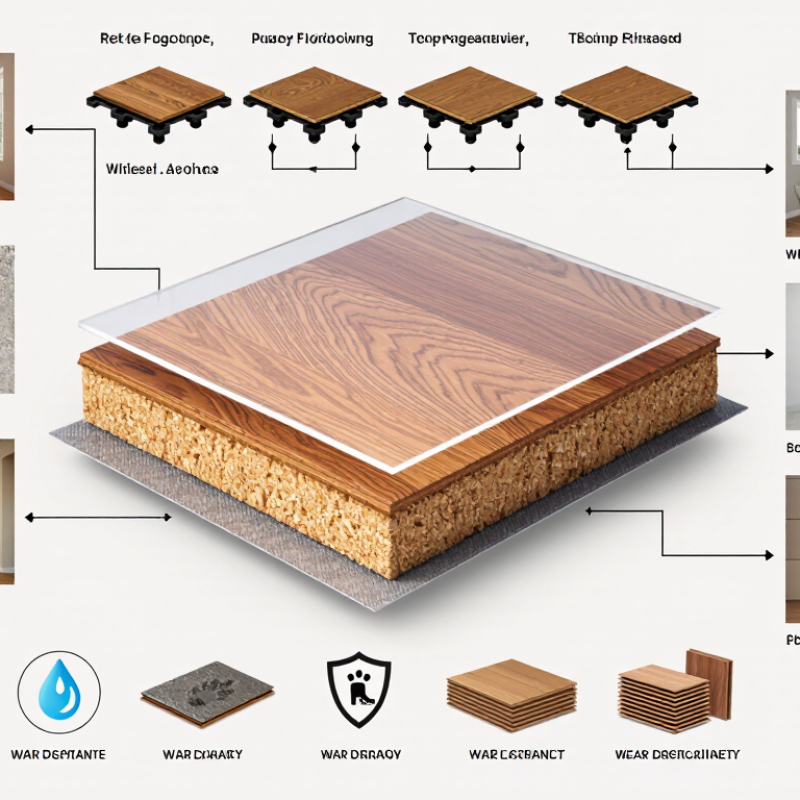
Define Laminate Plank Flooring and Its Main Components
Laminate plank flooring is a layered floor covering made to resemble timber, stone, or another surface. Each plank typically combines several materials, pressed and bonded into a single piece. It is not a solid wood board. The printed surface creates the appearance, while the layers beneath provide protection and structure.
That distinction matters.
The top wear layer is a clear coating that helps resist everyday scuffs and stains. Below it, a decorative image gives the plank its grain, knots, or color variation. The central core is often high-density fiberboard, which gives the plank stiffness and helps its edges hold together. A backing layer supports the underside and can help limit moisture-related movement, though it does not make every laminate plank waterproof.
Many planks have shaped edges that click together during installation, creating a floating floor over a prepared subfloor.
I find the word “wood” can make laminate sound more natural than it is; the printed pattern may repeat, and close inspection can reveal it. Layer quality and construction vary, so checking the product specifications is more useful than judging by appearance alone.
Explain How the Wear Layer Is Rated from AC1 to AC5
Laminate plank usually combines a printed wood-look design, a protective wear layer, and a dense fiberboard core. The wear layer’s Abrasion Criteria rating, or AC rating, indicates how well its surface resists wear in a standardized abrasion test. It does not measure every kind of damage. A high AC number alone cannot promise resistance to moisture, dents, or sharp scratches.
AC1 suits light residential use, such as a rarely used guest room. AC2 is intended for moderate residential traffic, while AC3 is commonly chosen for busy homes or lighter commercial settings. AC4 is designed for general commercial use, and AC5 for heavier commercial traffic. The scale rises with abrasion resistance. But real suitability depends on the room, footwear, pets, and cleaning habits—not only the label.
Picture grit tracked across a busy hallway: even a strong surface needs regular sweeping. That matters. AC ratings are useful for comparing wear performance, but product standards and test details can differ. Check the flooring’s technical sheet, installation guidance, and warranty conditions before choosing. Also consider the plank’s core and edge protection if spills are likely. I’d be cautious about treating AC5 as “indestructible”; it is a test category, not a guarantee against every daily mishap.
What Is Laminate Plank and What Types Are Available? — How the Wear Layer Is Rated from AC1 to AC5
Laminate Plank Basics and Common Types
| Category | Type or component | What it is | Typical use or consideration |
| Product definition | Laminate plank flooring | A layered flooring product, commonly made with a printed decorative image over a wood-based core and a transparent, resin-based wear surface. | Often selected to reproduce the appearance of wood or stone. It is generally installed as a floating floor using interlocking edges. |
| Surface layer | Wear layer | A clear protective overlay, typically made with melamine resin and often incorporating abrasion-resistant particles such as aluminum oxide. | Helps resist surface abrasion and staining. It does not make every product scratch-proof or waterproof. |
| Core construction | HDF-core laminate | Uses a high-density fiberboard core beneath the decorative layer; this is a common construction for laminate planks. | Core density, edge treatment, and joint design can affect durability and moisture performance. |
| Construction method | Direct-pressure laminate (DPL) | The decorative paper and protective overlay are pressed onto the core in a production process. | A widely used laminate construction. Performance depends on the complete product, not the construction label alone. |
| Construction method | High-pressure laminate (HPL) | The decorative and protective layers are first formed into a separate sheet under pressure, then bonded to the core. | May be specified for products designed for demanding use; compare the product’s test results and installation requirements. |
| Appearance | Wood-look or stone-look plank | The printed decorative layer depicts a material pattern; surface texture may be smooth, embossed, or registered to the image. | Appearance and texture are design features. They do not determine the AC abrasion class. |
| Moisture-related claims | Water-resistant or waterproof-labeled laminate | Some products have treated edges, tighter joints, or other design features intended to improve resistance to spills or moisture. | Claims and allowable exposure vary by product. Follow its stated limits; standing water and wet-room suitability should not be assumed. |
AC Abrasion Classes
| AC class | Commonly cited abrasion-test threshold* | Typical application guidance | Practical interpretation |
| AC1 | At least 900 abrasion cycles | Light residential use, such as a bedroom with limited foot traffic. | Entry-level abrasion class; less commonly chosen where traffic is frequent. |
| AC2 | At least 1,800 abrasion cycles | Moderate residential use, such as a living room or dining area. | Intended for typical household traffic rather than demanding commercial use. |
| AC3 | At least 2,500 abrasion cycles | Heavy residential use or light commercial use, depending on the product specification. | A common choice for busy homes; check the manufacturer’s stated application class. |
| AC4 | At least 4,000 abrasion cycles | General commercial use, such as offices, boutiques, or smaller retail spaces. | Designed for more demanding traffic than typical residential applications. |
| AC5 | At least 6,500 abrasion cycles | Heavy commercial use, such as busy public or retail spaces, when the full product specification is suitable. | The highest class in the AC1–AC5 scale; it does not by itself establish suitability for every commercial setting. |
How to read the rating: AC means Abrasion Class. The class is based on standardized surface-abrasion testing, commonly associated with EN 13329 for laminate flooring. The cycle figures above are commonly cited thresholds; test procedures and published requirements can depend on the standard edition. AC measures abrasion resistance—not plank thickness, impact resistance, scratch resistance, moisture resistance, or overall service life. Check the product’s technical documentation and installation instructions.
Compare Laminate Plank Types by Surface Finish and Visual Style
Laminate plank combines a printed decorative layer with a clear protective surface, so its finish affects both appearance and everyday feel. Matte finishes soften reflections and suit relaxed, natural-looking rooms. Satin offers a gentle sheen without making floorboards look overly glossy. High-gloss surfaces reflect more light, but can make dust, footprints, and small scratches easier to notice. Small difference. Big effect.
Visual styles range from oak, maple, and walnut looks to stone-inspired patterns and muted, painted effects. Embossed textures add grain or subtle ridges beneath your fingertips; some align closely with the printed pattern, creating a more realistic impression. A wood design may look convincing from standing height, yet repeated knots or grain can become obvious across a large floor. That detail is easy to overlook in a small sample. Compare several planks under your room’s lighting, and check how the pattern repeats before choosing.
Tips: View samples near windows and in evening light. Wipe a sample with a damp cloth to see how its finish looks clean; always follow the flooring maker’s care instructions.
Classify Planks by Installation System: Click-Lock and Glue-Down
Click-lock laminate planks connect through shaped edges, forming a floating floor that rests above the subfloor. The joints usually snap together without adhesive. No glue required. This system can suit rooms where a careful DIY installation is practical, but the base still needs attention. A gritty patch, raised seam, or soft spot can affect how the planks lock and feel underfoot. Check the product instructions for expansion gaps, underlay requirements, and room conditions; details vary by plank construction.
Glue-down planks are bonded directly to a prepared subfloor with a compatible adhesive. The installer spreads it evenly, places each plank, and keeps seams aligned as the adhesive sets. The result may feel more firmly anchored, especially in areas where movement is a concern. But preparation takes patience. Dust, moisture, or a slight dip can weaken the bond or telegraph through the finished surface. Not always obvious. Before choosing, consider the floor beneath, the room’s moisture exposure, and whether future repairs matter to you. Click-lock sections may be easier to take apart, while glued planks can demand more work to remove. A small misjudgment here can become a daily annoyance.
Laminate Plank Installation Systems: Click-Lock vs. Glue-Down
How to read this chart: 1 means the feature is typical of that installation system; 0 means it is not. Click-lock planks typically connect at the edges to form a floating floor, while glue-down planks are bonded to the subfloor with adhesive. Always follow the specific product’s installation instructions.
Choose Plank Thickness, Commonly Ranging from 6 to 12 mm
Laminate planks commonly range from 6 to 12 mm thick. The stated measurement usually describes the plank itself, not a separate underlayment. A thinner 6 or 7 mm plank can suit a flat, stable subfloor and may help when door clearance is limited. It can feel less substantial underfoot, though. Thicker options, often 10 to 12 mm, may feel steadier and reduce some hollow sounds, depending on the floor beneath them. Thickness alone does not determine wear resistance; the surface layer and product construction matter too.
Before choosing, check the subfloor with a straightedge and look for dips, ridges, or loose boards. A thicker plank cannot reliably hide an uneven base. Measure clearance beneath doors and check how the new floor will meet adjoining rooms. Those details are easy to overlook. Also confirm whether the installation instructions require separate underlayment or include an attached pad. A sample plank can help you judge its feel and height beside existing flooring. I once thought “thicker” meant “better,” but the room’s transitions and subfloor often tell a more useful story.