
Skip to Content
chevron-left chevron-right chevron-up chevron-right chevron-left arrow-back star phone quote checkbox-checked search wrench info shield play connection mobile coin-dollar spoon-knife ticket pushpin location gift fire feed bubbles home heart calendar price-tag credit-card clock envelop facebook instagram twitter youtube pinterest yelp google reddit linkedin envelope bbb pinterest homeadvisor angies

Why Are 3D Magnetic Toys Popular With Buyers?

Why Are 3d Magnetic Toys Popular With Buyers?

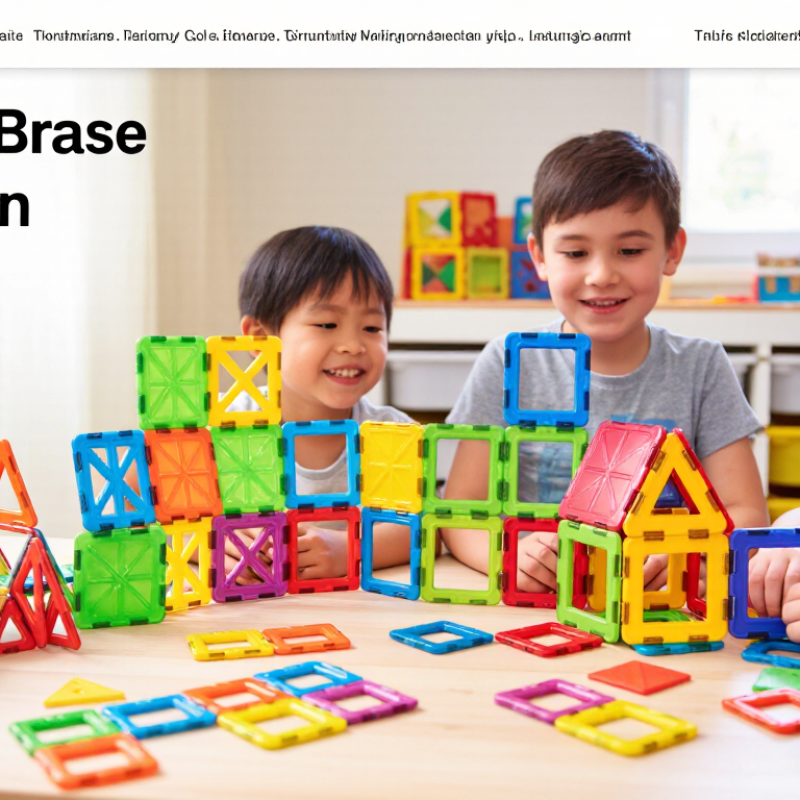
A 3d Magnetic Toy offers something many screen-based activities cannot: pieces children can hold, turn, and rebuild. Bright tiles click together into towers, bridges, or a lopsided little house. That physical feedback makes experimentation easy to see. A structure stands, leans, or falls—and invites another try. For parents and gift buyers, that open-ended play can feel more lasting than a toy built for one fixed purpose.

Industry data gives useful context, but not a complete answer. Circana reported that toy sales across 12 major global markets grew by 1% in 2024, following a 7% decline in 2023. Those figures describe the wider toy market, not magnetic construction toys alone. Buyers may be drawn to products that combine repeat play with simple setup, shared building, and compact storage. A box of tiles can move from the kitchen table to a classroom shelf. That practicality counts.

There is a learning angle, too. Children can test balance, symmetry, color, and basic spatial ideas while making visible changes with their hands. Still, a toy does not guarantee learning. Adult guidance, age suitability, and product quality matter. Buyers should check clear age guidance and inspect pieces for damage, especially when younger children are involved. Not every set is equally durable. That deserves more attention. The appeal is real, but it is not mysterious: quick results, room for imagination, and the pleasure of making something that actually stands.
Why Are 3D Magnetic Toys Popular With Buyers?

What Are 3D Magnetic Toys?

3D magnetic toys are construction sets made from pieces that attract one another through built-in magnets. Many use colorful tiles, rods, or geometric panels. Children connect them to make cubes, towers, bridges, and less predictable shapes. The magnetic pull holds pieces together, so structures can be assembled and taken apart without small fasteners. That makes experimentation quick. A tall tower may lean, slip, and need rebuilding.

Unlike ordinary blocks, magnetic pieces can connect along different edges and form open frames or flat patterns. Playing with them may help children explore balance, symmetry, and basic geometry through hands-on trial and error. The experience varies with the set’s piece shapes, magnet strength, and the child’s age. Not every creation stands securely, and that can be frustrating. It is also part of figuring out how the pieces work.

Tips: Choose pieces suited to the child’s age, and check the packaging for safety guidance. Supervise young children, especially around small parts. Store loose pieces together; they can cling to metal furniture or one another. To test stability, build a wide base before adding height. A slightly uneven design can still be interesting.

How Do Their Magnetic Components Work?

Why Are 3D Magnetic Toys Popular With Buyers?

How Do Their Magnetic Components Work?

Many 3D magnetic toys use small permanent magnets sealed inside plastic pieces, rods, or spheres. Each magnet has a north and south pole. Opposite poles attract, while matching poles push away. That simple force lets pieces snap together, separate, and sometimes pivot into new shapes. Click. The satisfying connection is part of the appeal, but the magnets are doing practical work: they help hold a structure without clips or complicated fasteners. Magnet strength and placement vary between designs, so pieces from different sets may not connect as expected.

When several pieces meet, their magnetic fields guide the connection, though they do not guarantee a perfectly stable model. A tall tower can lean if its base is narrow or its joints carry too much weight. This is a useful reminder: magnetic attraction is not the same as a rigid lock. Makers typically enclose the components, but inspect toys for cracks or loose parts, and follow the age guidance on the packaging. Small components can be a hazard for young children.

Tips: Build a broad base before adding height. If a joint keeps slipping, rotate one piece and test the connection rather than forcing it. A little wobble is normal; it can also show where the design needs support.

What Features Make Them Engaging to Buyers?

A 3D magnetic toy is engaging because it turns an idea into something children can hold and change. Flat pieces meet with a gentle pull, making a loose pile become a tower, bridge, or lopsided animal. That first connection feels satisfying. Bright colors also help buyers picture how a set might invite play without needing a screen or a complicated instruction booklet.

The open-ended design keeps the experience fresh. A child can copy a picture, then move one piece and discover that the whole structure changes. This encourages spatial thinking through trial and error, rather than a fixed sequence of steps. Not every build stands up. That is part of the appeal, though it can frustrate a child who expects instant success. Playing together can help: one person holds a base while another tests a new angle.

Buyers may also value toys that are easy to store and reuse, with pieces that connect smoothly and separate without a struggle. Small details matter. A rounded edge, a clear color contrast, and a useful range of shapes can make building less fiddly. Check the age guidance and inspect pieces for damage, especially when younger children are nearby. Magnets should be handled with care.

What Benefits Do Buyers Associate With Them?

Buyers often value 3D magnetic toys because flat pieces can become towers, bridges, or small geometric forms. The magnetic connections make building feel immediate: a child can attach two panels, test the balance, and revise the shape. That hands-on process can encourage spatial thinking and problem-solving without making play feel like a formal lesson. It can also invite shared play, as siblings or adults suggest ways to strengthen a wobbly structure.

There is a practical appeal, too. The pieces are usually easy to rearrange, so one set can support many designs and different skill levels. Building may offer a screen-free activity for a quiet afternoon. Still, the toys are not magic. Some children may lose interest, and elaborate models can fall apart easily. That frustration can be useful, but it is worth recognizing that every buyer values play differently.

Tips: Start with a simple shape on a steady table. Check the product’s age guidance, and supervise young children around small pieces. If a structure keeps collapsing, try fewer panels and a wider base.

Why Are 3D Magnetic Toys Popular With Buyers? - What Benefits Do Buyers Associate With Them?
Buyer-Associated Benefit What the Toy Offers Why It May Appeal to Buyers Practical Consideration
Creative, open-ended play Many magnetic construction toys let users connect pieces to make different shapes and three-dimensional structures. There may be no single finished model, so builders can experiment, rebuild, and invent their own designs. The range of possible designs depends on the number, shape, and compatibility of the pieces.
Hands-on learning Magnetic pieces demonstrate attraction and repulsion through direct interaction. Buyers may value the opportunity to explore a basic science concept while building and playing. Magnets do not teach every science concept by themselves; questions and guided activities can add context.
Spatial and problem-solving practice Building in three dimensions involves fitting pieces together, testing stability, and adjusting designs. This can make construction play engaging for people who enjoy puzzles, models, and trial-and-error challenges. Difficulty varies by toy design and by the builder’s experience.
Tactile, interactive play Pieces connect and separate through magnetic force, creating a distinct hands-on building experience. The immediate feedback can make assembling and changing a structure satisfying and easy to explore. Connection strength and ease of handling differ across designs and piece sizes.
Repeat play and rebuildability Most reusable construction sets can be taken apart and assembled into new forms. Buyers may appreciate a toy that supports multiple builds rather than only one completed display. Pieces can be misplaced, so storage helps keep a set usable.
Shared building activity Several people can contribute ideas and pieces to a shared construction project. Collaborative builds can provide a simple activity for families, classrooms, or groups. Small sets may limit the size or complexity of a project for multiple builders.
Safety and age suitability Magnetic toys vary in magnet strength, piece size, and recommended age range. Buyers can choose a design that better fits the intended user and play setting. Follow the product’s age guidance and safety instructions. Swallowed magnets can cause serious injury; keep loose magnets away from young children and seek urgent medical help if ingestion is suspected.

What Factors Influence Their Popularity?

3D magnetic toys attract buyers because they combine a simple action with a visible result. A child connects two pieces, and a flat shape can become a small tower or animal. That immediate feedback makes experimenting feel rewarding without instructions for every step. It is hands-on.

The range of possible designs also matters. Some buyers want a quiet activity for a kitchen table; others value pieces that pack neatly for travel. Color, shape variety, and the strength of the connections affect how long a set holds attention. If pieces separate too easily, a carefully built bridge may collapse with one bump. Frustrating.

Price and perceived durability influence the decision, too. Parents often look for smooth edges, securely enclosed magnets, and clear age guidance. Small parts may not suit young children, so checking the packaging matters. Reviews can offer useful clues, but they do not prove that every set performs the same way. A few pieces may feel less satisfying than expected, even when the photos look impressive. And more pieces do not automatically mean better play. Buyers weigh convenience, safety information, and the kind of building experience they actually want.