Blog
What Is the Best Double Glass Window in China?
Choosing the best double glass window in China requires more than comparing prices or polished product photos. The right choice depends on climate, building design, glass configuration, frame quality, and installation control. A window that performs well in Beijing may need different specifications in Guangzhou or a coastal city.
This guide examines practical details buyers can verify. We will compare Low-E coatings, argon-filled cavities, thermal-break aluminum, uPVC, and reliable hardware systems. Common insulated glass sizes, such as 6+12A+6, can offer balanced insulation and sound reduction. However, thicker glass is not automatically better. The complete assembly matters.
Look closely at the evidence.
Experienced suppliers should provide test reports, product drawings, warranty terms, and clear manufacturing records. Ask whether the glass is tempered, laminated, or heat-treated when safety requires it. Check sealant quality, spacer materials, drainage design, and corner welding. Small defects often appear around these details, not in the showroom sample.
Installation deserves equal attention. Poor alignment, uneven foam, or missing exterior sealing can reduce an excellent window’s performance. Independent inspection can reveal air leakage, condensation risks, and hardware problems before delivery. National and international standards may both apply, depending on the project location. Confirm them with a qualified professional.
No window is perfect. Some supplier claims may sound convincing but remain difficult to verify. This article therefore focuses on measurable specifications, supplier transparency, and practical purchasing experience. The goal is a dependable decision, not the cheapest quotation.
What Makes a Double-Glass Window High Quality?
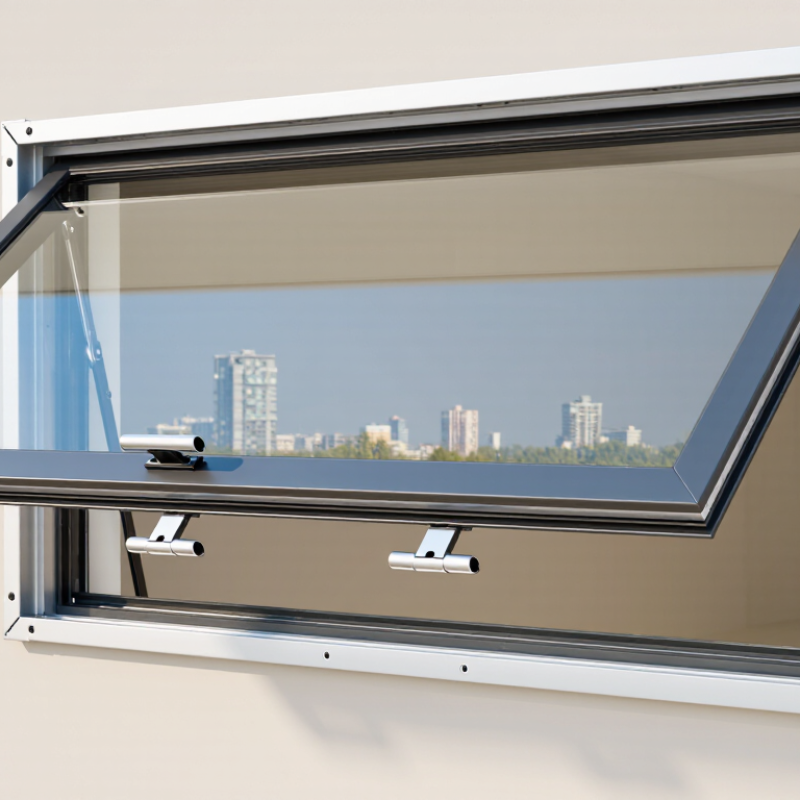
A high-quality double-glass window starts with the glass, not the advertising. The two panes should have consistent thickness and no visible distortion, bubbles, or edge damage. Low-emissivity coating can reduce heat transfer while allowing useful daylight indoors. The gap between panes also matters. A properly sealed spacer limits moisture and protects the insulating gas. Small construction details create large comfort differences.
The frame should resist warping, sunlight, and seasonal movement. Thermal breaks are valuable, especially in areas with hot summers or cold winters. Check the seals carefully. They should sit evenly, without gaps or brittle sections. A quality window also needs verified air, water, and wind-resistance test results. Installation is equally important. Even excellent glass performs poorly when the opening is uneven or the perimeter is poorly sealed. Site measurements should be taken more than once.
Do not judge quality by weight alone.
In practice, I would ask for performance data, material specifications, and a clear warranty. I would also inspect a finished sample, because brochures rarely show corner joints or drainage paths. A perfect window does not exist. A stronger choice is one that fits the local climate, building orientation, and installation conditions. My own evaluation would remain cautious when a supplier gives impressive numbers but cannot explain how those numbers were tested.
How Double-Glass Windows Are Designed and Made in China
Choosing the best double-glass window in China starts with understanding its design. Two glass panes create an insulating airspace, often filled with argon. A warm-edge spacer can reduce heat transfer around the edges. Low-emissivity coating also helps control indoor temperature and sunlight.
In a well-managed Chinese factory, production begins with glass cutting, edge processing, coating inspection, and spacer assembly. The panes are cleaned carefully before sealing. Even a small particle can weaken long-term performance. Automated equipment improves consistency, but skilled workers still inspect corners, sealant lines, and frame joints. The finished window should be tested for air leakage, water resistance, wind pressure, and thermal performance. Ask for clear test records, material specifications, and installation guidance. These details matter more than a polished showroom sample.
Tips: Check the glass thickness, spacer type, gas filling, and coating position before ordering. Compare the whole system, not only the glass. In humid areas, inspect drainage paths and sealant quality closely. In my experience, factory claims can sound stronger than the evidence. That is worth questioning. A reliable supplier should explain its process plainly and accept reasonable technical questions. Even excellent windows can perform poorly when the opening is measured incorrectly or installation is rushed.
Which Materials and Features Affect Window Performance?
For Chinese homes, the best double-glass window is a balanced system, not simply two panes. Glass type, coating, cavity gas, spacer, frame, and installation all affect results. Low-E glass reflects long-wave heat while admitting controlled daylight. The U.S. Department of Energy reports that low-E windows can reduce window heat loss by 30–50% compared with ordinary glass. That figure is useful, but it does not guarantee household savings. Orientation and local climate still matter.
A 12–16 mm argon cavity often provides strong thermal resistance when seals remain intact. A warm-edge spacer reduces heat flow around the glass perimeter. Thermally broken aluminum, uPVC, or fiberglass frames can outperform uninsulated metal frames. NFRC rating reports separate U-factor, solar heat gain coefficient, visible transmittance, and air leakage. These numbers prevent vague claims. For hot southern cities, lower SHGC can reduce afternoon cooling demand. For colder northern areas, lower U-factor is usually more valuable. Acoustic performance needs different glass thicknesses, laminated layers, and careful sealing.
A common site problem is excellent glass installed in a poor opening. Gaps around the frame invite drafts, moisture, and street noise. The Lawrence Berkeley National Laboratory WINDOW database shows that frame and spacer choices materially change whole-window U-factor. Ask for tested whole-window values, not center-of-glass results. China’s GB/T 11944 standard covers insulating glass units, but factory quality and installation still require verification. Published ratings are laboratory measurements. Real buildings are messier. Inspect drainage paths, seal continuity, hardware compression, and condensation risk before ordering.
What Is the Best Double Glass Window in China? - Which Materials and Features Affect Window Performance?
Comparison of common double-glazed window configurations and the main technical factors that influence thermal insulation, solar control, sound reduction, durability, and value.
| Window Configuration | Glass Composition | Frame Material | Typical Whole-Window U-Factor (W/m²·K) |
Typical SHGC | Typical Sound Reduction (Rw, dB) |
Condensation Resistance | Recommended Climate or Application | Overall Assessment |
|---|---|---|---|---|---|---|---|---|
| Standard double glass | 4 mm clear glass + 12 mm air space + 4 mm clear glass | Aluminum frame without thermal break | 2.7–3.2 | 0.65–0.75 | 27–30 | Low to moderate | Unconditioned spaces, mild climates, garages, and low-cost projects | Lowest initial cost, but limited energy efficiency and surface-temperature control |
| Thermally improved double glass | 5 mm low-E glass + 16 mm argon + 5 mm clear glass | Thermally broken aluminum frame | 1.5–1.9 | 0.45–0.60 | 30–34 | Moderate to high | Mixed climates, apartments, offices, and general residential construction | Balanced performance, slim appearance, and good durability |
| High-performance low-E double glass | 6 mm solar-control low-E glass + 16 mm argon + 6 mm clear glass | Thermally broken aluminum frame with insulated glazing spacer | 1.3–1.7 | 0.28–0.45 | 31–35 | High | Hot climates, façades with strong solar exposure, and energy-conscious buildings | Best choice for reducing solar heat gain while maintaining strong insulation |
| Warm-edge double glass | 5 mm low-E glass + 16 mm argon + 5 mm clear glass | uPVC frame with multi-chamber profile | 1.2–1.6 | 0.45–0.60 | 30–34 | High | Cold or mixed climates where thermal efficiency is more important than frame slimness | Very good insulation and value; frame color and expansion should be considered |
| Premium timber double glass | 5 mm low-E glass + 16 mm argon + 5 mm clear glass | Engineered timber frame with protective exterior finish | 1.2–1.6 | 0.45–0.60 | 32–36 | High when properly maintained | Cold climates, heritage-style buildings, and projects prioritizing natural materials | Excellent thermal and acoustic performance, but requires regular coating maintenance |
| Acoustic double glass | 6 mm laminated acoustic glass + 16 mm argon + 6 mm clear glass | Thermally broken aluminum or uPVC frame | 1.4–1.9 | 0.45–0.65 | 36–42 | Moderate to high | Urban roads, railways, airports, schools, and high-noise locations | Best for noise reduction; laminated glass increases weight and hardware requirements |
| Safety-focused double glass | 5 mm tempered glass + 16 mm argon + 5 mm laminated glass | Thermally broken aluminum or reinforced uPVC frame | 1.5–2.0 | 0.45–0.65 | 32–37 | Moderate to high | Doors, low-level windows, schools, commercial buildings, and high-traffic areas | Improved impact and breakage safety; exact glass specification depends on building regulations |
Notes: U-factor values are lower when thermal insulation is better. SHGC indicates the fraction of solar heat admitted through the glazing; lower values reduce overheating. Performance varies with window size, opening style, spacer type, installation quality, air leakage, and local testing standards. The ranges shown are typical industry values for complete window assemblies rather than glass-only center-of-glazing values.
How to Compare Chinese Double-Glass Window Manufacturers
What Is the Best Double Glass Window in China?
How to Compare Chinese Double-Glass Window Manufacturers
Comparing Chinese double-glass window manufacturers requires more than checking online prices. Study the complete product system, including glass, spacer bars, seals, frames, hardware, and installation support. A low quote may hide thinner profiles or weaker weather seals.
Request technical data for U-value, visible light transmission, sound reduction, and air tightness. Ask whether the glass uses Low-E coating, argon filling, or warm-edge spacers. Independent laboratory reports are useful, but verify their dates, testing scope, and product references. Some documents look impressive. They may not match your final window design.
Inspect factory videos carefully, or arrange an on-site audit when possible. Check cutting accuracy, sealant application, glass storage, and quality-control records. Ask for production samples with corner joints and drainage details. On a physical sample, look for scratches, uneven gaps, and difficult hardware movement. Small defects often become expensive after installation.
Evaluate communication, customization ability, packaging, delivery planning, and after-sales response. A reliable manufacturer should explain tolerances clearly and provide installation drawings. Confirm warranty terms in writing, including exclusions and replacement procedures. I once underestimated installation quality in a comparison; the window specification was strong, but poor alignment caused drafts. That mistake changed my evaluation method. Product performance depends on both manufacturing and installation.
How to Choose the Best Window for Different Building Needs
The best double glass window in China depends on the building, not just the glass. A cold northern home may need low-E glass, argon filling, and a low U-value to retain indoor heat. In warmer southern cities, solar control can matter more. A west-facing room with strong afternoon sunlight needs different glass from a shaded bedroom. Sound reduction also changes the choice near airports, railways, or busy roads.
Frame quality deserves equal attention. Thermally broken aluminum frames reduce heat transfer, while durable seals help block rain and dust. In coastal areas, corrosion-resistant hardware is important. Check the complete window system, not only the glass specification. During site reviews, I have seen excellent glazing perform poorly because of uneven installation gaps. One low U-value once looked impressive, yet the room still felt cold near the frame. That was a useful reminder: laboratory data cannot replace careful installation.
Tips: Match the window to climate, orientation, noise, and ventilation needs. Ask for tested U-value, solar heat gain, airtightness, and water resistance data. Inspect corner joints and drainage paths. For high-rise buildings, confirm wind-load calculations and safe opening limits. A reliable supplier should explain maintenance, replacement parts, and installation responsibility clearly. Do not choose the thickest glass automatically; heavier units may stress hardware and increase costs. Sometimes, the “best” specification is simply too much for the building.
Related Posts
-
How to Choose the Best Double Glass Window for Your Home?
-
Top 10 Benefits of Double Glass Windows for Your Home Design?
-
Are Triple Pane Windows Worth the Investment in 2026?
-
China Best Wood Clad Windows for Your Home Needs?
-
Why Choose Single Hung Windows for Your Home Upgrade?
-

How to Choose the Best Double Glazed Glass for Your Project?