
Blog
What Are the Best Sliding Windows in China for Global Buyers?
Choosing the best sliding windows in China starts with the project, not a product ranking. A coastal home, a high-rise apartment, and a quiet suburban renovation can need very different frame materials, glass combinations, and opening systems. Global buyers should compare thermal performance, air and water resistance, sound reduction, safety features, and ease of maintenance. Looks alone are not enough. A slim frame may suit a modern façade, while a heavier system may better support larger panes or demanding weather conditions.
China has many window manufacturers, but product quality and service can vary. Request clear specifications, test reports, warranty terms, and details about hardware and glass suppliers. Check that documents match the exact model being quoted, and confirm whether relevant testing or certifications suit the destination market. Ask for samples or a detailed shop drawing before approving custom sizes. Small details matter: drainage paths, locking points, seal placement, and packaging can affect daily use and delivery condition. A capable supplier should answer these questions plainly and provide consistent records. That is a useful sign, not a guarantee.
There is no universal winner. A lower quote may exclude installation guidance, upgraded glass, or export packaging, so compare like with like. Buyers should also confirm lead times, communication arrangements, and how defects are handled. I would be cautious about treating online rankings as proof; specifications and independent evidence deserve more weight. The best sliding windows are those that meet the building’s needs, fit the buyer’s budget, and arrive with reliable documentation and support. Even then, choices involve trade-offs. That is worth reviewing before placing an order.
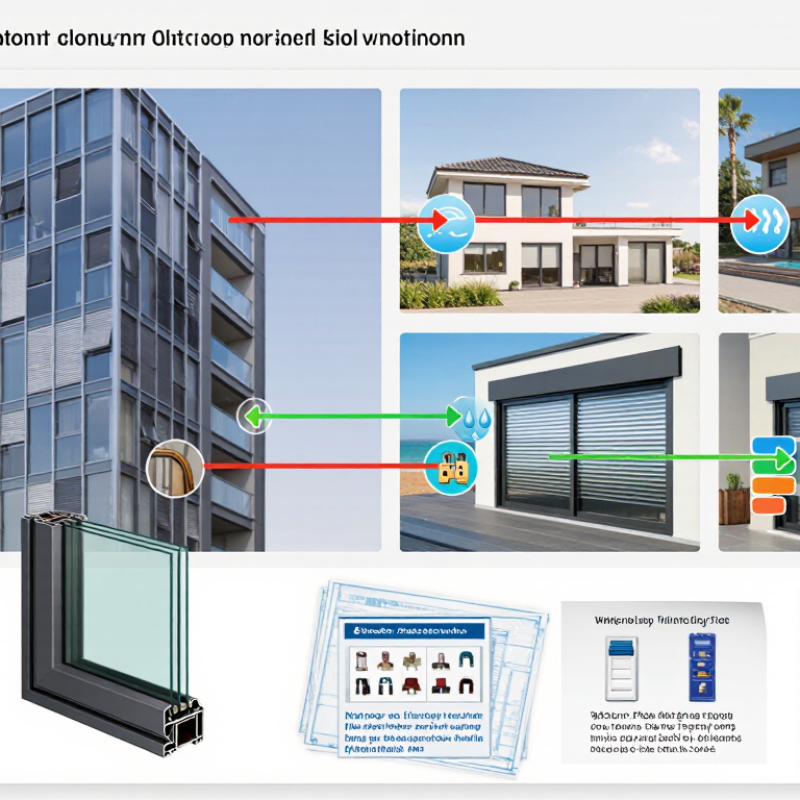
What Sliding Windows Are and How They Work
A sliding window uses one or more movable panels, called sashes, that travel horizontally within a frame. One sash usually stays fixed while the other moves along a track. Unlike a casement window, it does not swing into the room or outside. No extra clearance is needed.
Small rollers beneath the movable sash carry its weight and guide it along the lower track. A handle helps move the panel, while a latch holds it closed. When shut, weather seals along the frame reduce drafts and water entry. Some designs include drainage openings that direct rainwater outward. These details matter: a track clogged with grit can make the sash harder to move.
For buyers comparing windows, ask how many panels open and how the rollers can be accessed for cleaning or repair. Check that the sash slides evenly, without scraping or rattling, and that the lock engages firmly. Smooth motion is not guaranteed by appearance alone. Installation also affects performance; a frame that is not level can strain the rollers and leave uneven gaps. I have seen this detail overlooked during measurement. It is worth checking the opening carefully before ordering, especially where wind, rain, or frequent use is expected.
Common Sliding Window Types and Their Uses
Two-panel sliding windows are a practical choice for bedrooms, kitchens, and smaller apartments. One sash moves while the other stays fixed, leaving a clear view and a simple opening. They are easy to operate. For a kitchen above a counter, check that the handle and track remain reachable after installation. Dust can gather in the lower track, so a removable track cover or regular cleaning makes a difference.
Three- or four-panel systems suit wider living-room openings and balconies. More panels can increase the open area, though the fixed panels still limit how much space clears. Lift-and-slide windows use a handle to raise the sash slightly before it rolls, which can help with large, heavy glass panels. They may cost more and need careful installation. I used to think a wider opening was always better; it is not, especially where furniture or strong wind affects daily use. For hot or cold climates, ask about insulated frames, glazing, drainage, and tested air and water performance. The best type depends on the room, not just the view.
Materials, Glass Options, and Key Performance Features
For sliding windows sourced from China, material choice should follow climate, panel size, and maintenance expectations. Thermally broken aluminum suits slim frames and larger panes, but frame quality and drainage details matter. uPVC can insulate well, though very wide sashes may need careful reinforcement. Wood-aluminum composites offer a warm interior finish, with more upkeep to consider. Small details matter. The IEA’s 2023 Global Status Report for Buildings and Construction estimates that buildings used 30% of global final energy in 2022 and produced 26% of energy-related emissions. That makes glazing performance more than a comfort detail.
Double glazing is a practical baseline; triple glazing may help in colder climates, but adds weight and cost. Low-emissivity coatings limit heat transfer, while argon-filled cavities can improve insulation when seals remain intact. Ask for whole-window U-factor and solar heat gain coefficient (SHGC), not glass-only figures. NFRC ratings provide a useful comparison framework for buyers serving the United States; other destinations may require different test protocols. Not always interchangeable.
On a sample, inspect the meeting rails, rollers, corner joints, and weep holes. Sliding systems rely on tracks and seals, so smooth movement alone does not prove weather resistance. Request third-party air, water, and wind-pressure test reports for the same configuration you plan to order. I would also confirm glass thickness, coating position, and hardware load limits in writing. A small mismatch in panel size can change performance. That detail is easy to overlook.
How to Compare Chinese Sliding Window Manufacturers
Comparing Chinese sliding window manufacturers starts with product fit, not catalog photos. Ask for section drawings, alloy and wall-thickness data, glass build-up, and hardware specifications. A sample can reveal sash weight, roller noise, and whether locks engage without force. Small details matter.
Check the evidence behind performance claims. Request reports tied to the exact window series, including air leakage, water penetration, and wind-load results. Confirm the test methods and laboratory identity; a generic certificate may cover a different configuration. Review drainage paths, corner joints, coating consistency, and replacement-part availability. Ask how the factory controls dimensions across repeat orders. A video call can show production, but it cannot replace an independent inspection.
Compare quotes line by line: packaging, sample fees, tooling, lead time, warranty terms, and after-sales response. Consider a pilot order, then inspect units after shipping. Clarify the destination climate and installation details with a qualified local professional; window performance depends on the whole opening. No scorecard is perfect. I would weigh documented results and clear answers more heavily than the lowest price. Uneven paperwork is not proof of poor quality, but it deserves a closer look.
How to Compare Chinese Sliding Window Manufacturers
Ask manufacturers for test reports against recognized standards—not just general performance claims.
The chart shows the numbered class ranges in EN 12207 (air permeability), EN 12208 (watertightness) and EN 12210 (resistance to wind load). These scales measure different properties and are not directly comparable. Request reports for the exact window configuration, dimensions, glazing and hardware you plan to buy.
Factors Global Buyers Should Check Before Ordering
Before ordering sliding windows from China, match the specification to the project’s climate and building use. The U.S. Department of Energy’s Energy Saver guidance estimates that heat gain and loss through windows account for about 25–30% of residential heating and cooling energy use in the United States. This is not a universal figure, but it shows why glass selection matters. Ask for whole-window U-factor and solar heat-gain data, not glass-only claims. Small details count.
Check that test results cover the exact configuration: frame material, glazing, seals, dimensions, and opening type. The National Fenestration Rating Council (NFRC) provides standardized ratings for comparing U-factor and solar heat-gain coefficient. Request equivalent accredited test reports if your project uses another national scheme. Ask for air-leakage, water-penetration, and structural-load results, too. A certificate for a fixed window cannot prove a sliding unit performs the same. Easy to overlook.
Review hardware and production controls in person or through dated inspection records. Rollers should move a full-size sash smoothly, while drainage slots remain clear after coating and assembly. Confirm corrosion resistance, spare-part availability, packaging, lead time, and written remedies for damaged deliveries. Request a pilot sample before a large order. A sample is useful, not conclusive: factory batches and installation quality can differ. I would leave some tolerance for site conditions; plans rarely capture every uneven opening.
What Are the Best Sliding Windows in China for Global Buyers? — Factors Global Buyers Should Check Before Ordering
| Factor | What to Check | Useful Evidence or Specification | Why It Matters to Global Buyers |
|---|---|---|---|
| Frame material and construction | Confirm whether the frame is aluminum, uPVC, timber, or a combination. For aluminum, ask for profile drawings, wall thickness, alloy/temper details, and finish specifications. | Technical drawings and material specifications; coating or anodizing details where applicable. | Material and profile design affect strength, corrosion resistance, maintenance, thermal performance, and compatibility with the project’s local requirements. |
| Glass configuration | Specify pane count and thickness, insulating-glass cavity, safety-glass requirements, and any low-emissivity coating or gas fill. Check whether the glass make-up suits the window dimensions and local code. | A written glass build-up, such as pane thickness and cavity width; safety-glass certification where required. | Glass choices influence heat transfer, solar gain, noise reduction, safety, and overall weight. Performance depends on the complete glazing system, not just the pane count. |
| Thermal performance | Request whole-window thermal performance for the proposed frame, glass, spacer, and size. Check whether the reported figure is a whole-window value or glass-only value. | U-factor or U-value test report, with the test method, specimen size, and product configuration identified. | A comparable whole-window figure helps assess heating and cooling needs. The required target varies by climate, building code, and project design. |
| Air leakage and water resistance | Ask how the complete window performs under air-leakage and water-penetration tests. Confirm the test pressure, specimen size, and whether the tested design matches the order. | Laboratory reports using project-relevant methods, such as ASTM E283 for air leakage and ASTM E547 for water penetration, where applicable. | Sliding units rely on tracks, seals, drainage, and installation details. A test result for a different size or configuration may not represent the ordered unit. |
| Wind-load resistance | Provide the project’s design wind pressure and ask for structural test evidence for the relevant window size, glass, and frame configuration. | Structural test report; ASTM E330 is one commonly used method for evaluating structural performance under uniform static air pressure. | Wind requirements depend on building height, location, exposure, and local codes. Do not rely on a generic “wind resistant” claim without a stated rating or report. |
| Sliding hardware and operation | Check roller type and adjustment, locks, anti-lift features, track design, replaceability, and the sash’s operating weight. Ask about cycle testing and spare-part availability. | Hardware schedule, operating instructions, maintenance guidance, and any applicable durability test data. | Hardware affects smooth operation, security, service life, and repair costs. Oversized or heavy sashes need appropriately specified rollers and tracks. |
| Drainage and weather seals | Review track drainage paths, weep-hole locations, corner joints, brush or compression seals, and the installation interface with the wall opening. | Section drawings showing drainage and sealing details, plus installation instructions for the intended wall type. | Poor drainage or incorrect installation can cause water entry even when the window itself has suitable test results. |
| Dimensions and tolerances | Issue a confirmed schedule with opening width and height, frame depth, handing, panel arrangement, sill details, and required installation clearances. | Shop drawings approved before production; a clearly stated measurement convention and manufacturing tolerance. | Small discrepancies can prevent installation or affect sealing. Confirm whether dimensions refer to the frame, masonry opening, or finished opening. |
| Standards and certification | Identify the destination-market code and required test methods before ordering. Ask which exact product configuration is covered by each report or certificate. | Relevant reports and certifications; GB/T 8478-2020 is a Chinese standard for building doors and windows, while export projects may require destination-market standards. | Compliance requirements differ by country and project. A standard or certificate does not automatically establish compliance in every destination market. |
| Finish, corrosion, and maintenance | Specify color, coating type, surface finish, exposure conditions, cleaning method, and any corrosion-resistance requirements, especially for coastal or high-humidity locations. | Finish specification, sample approval, care instructions, and relevant coating or corrosion test evidence if required. | Exposure to salt, moisture, sunlight, and cleaning chemicals can affect finish durability. Suitability depends on the specified finish and environment. |
| Acoustic performance | For noise-sensitive sites, request a sound-insulation rating for the complete window assembly and confirm that the tested glass and frame match the proposed product. | Laboratory sound-transmission test report, such as a rating under the method required by the destination market. | Acoustic performance depends on glass, seals, frame, installation, and surrounding construction. A glass-only rating is not a whole-window result. |
| Packaging and shipment | Confirm protective packaging, glass protection, loading method, shipment marking, packing list, and responsibility for freight, insurance, and import clearance. | Approved packing plan, shipping documents, and agreed Incoterms® rule and named place. | Windows are vulnerable to impact and handling damage. Clear shipping terms help define cost allocation and transfer of risk. |
| Quality control and order terms | Agree on pre-production drawing approval, sample or mock-up review, inspection points, defect criteria, warranty scope, replacement parts, and delivery schedule. | Written purchase specification, inspection checklist, warranty terms, and confirmed production and shipping milestones. | Clear acceptance criteria reduce misunderstandings and make it easier to manage defects, delays, and after-sales needs across borders. |
Related Posts
-
Best Sliding Windows for Global Buyers in 2026?
-

Top 10 Tips for Choosing Aluminum Windows for Your Home?
-

China Best Door Window Solutions for Global Buyers?
-
2026 How to Choose Window Parts for Global Sourcing?
-

China Top Hopper Window Suppliers for Global Buyers?
-
Best Wood Windows Manufacturers in China?