
Blog
How to Choose Exterior Windows for Any Climate?
Choosing exterior windows is not simply a matter of style, price, or frame color. Climate changes the performance equation. The U.S. Department of Energy’s Energy Saver guidance estimates that windows can account for 25–30% of residential heating and cooling energy use. That figure makes glass selection a building-performance decision, especially in rooms facing intense afternoon sun or winter winds.
A reliable choice begins with climate data and measurable ratings. The National Fenestration Rating Council (NFRC) evaluates U-factor, solar heat gain coefficient (SHGC), visible transmittance, and air leakage. U-factor indicates insulation performance, while SHGC shows how much solar heat enters through the glass. In cold regions, lower U-factor and carefully selected SHGC can reduce heat loss. In hot regions, lower SHGC can limit unwanted indoor heat. ENERGY STAR guidance also reports that replacing clear-glass, single-pane windows with qualified products may reduce household energy bills by approximately 7–15%.
Details matter. A well-rated window can still perform poorly with weak flashing, poor installation, or an exposed sill. Real buildings are less tidy. Wind direction, exterior shading, humidity, salt air, and local temperature swings can change the recommendation. Even professional guidance needs review at the project site. Before choosing exterior windows, compare NFRC labels, local climate conditions, orientation, frame materials, and installation quality. The best specification is not always the most expensive one. It is the one that remains comfortable, durable, and practical after years of weather.
Classify Climate by ASHRAE Zones and Seasonal Heating or Cooling Loads
How to Choose Exterior Windows for Any Climate?
Classify Climate by ASHRAE Zones and Seasonal Heating or Cooling Loads
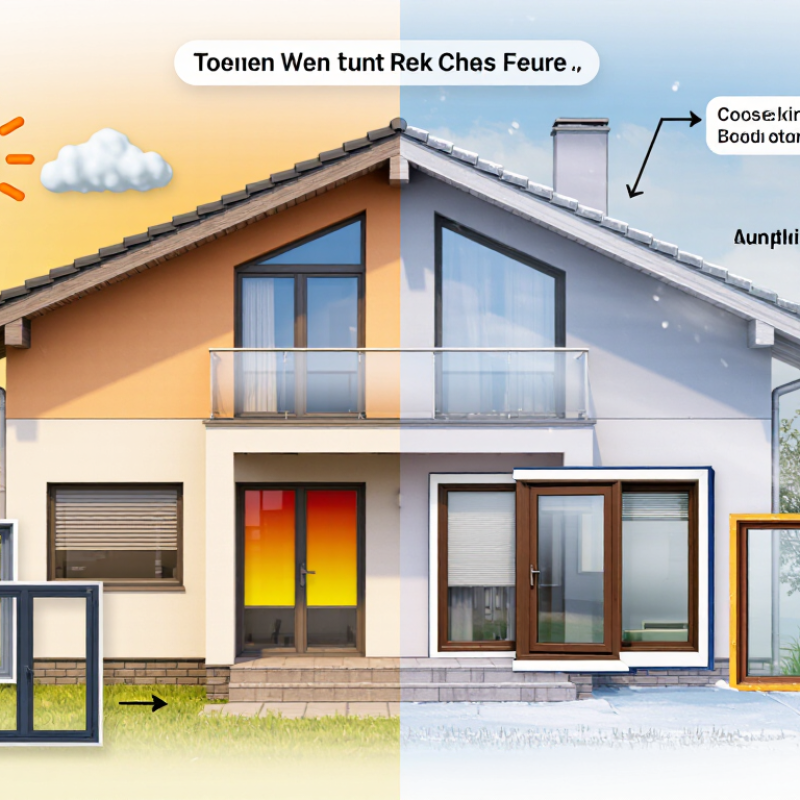
Window selection becomes clearer when climate is classified by ASHRAE zones. Zones 1 and 2 face strong cooling demand, while zones 6 through 8 need more heating protection. Zones 3 through 5 can require both across the year. Moist, dry, and marine conditions also affect performance. A local climate map is useful, but it should not replace site evaluation.
In hot climates, choose glazing with a lower solar heat gain coefficient, especially on west-facing elevations. Lower SHGC can reduce afternoon heat entering through large glass areas. In cold climates, prioritize a low U-factor and tight air control. Warm-edge spacers and insulated frames can limit heat loss near the glass edge. Check visible transmittance too. Dark rooms are not always comfortable.
Seasonal load matters more than the zone label alone. A shaded coastal home may perform differently from a sunny inland home in the same zone. I once focused too heavily on U-factor and overlooked summer glare. That choice needed revision. Measure twice. Compare orientation, overhangs, window size, and ventilation patterns before ordering. Ask for independently verified thermal data, installation instructions, and local code requirements. A well-rated window can still fail when flashing is poor or the frame is installed out of square. That detail matters.
| ASHRAE Climate Zone | General Climate Classification | Seasonal Load Pattern | Primary Window Objective | Practical Starting Target for Whole-Window U-Factor* | Practical Starting Target for SHGC* | Recommended Glazing Approach | Important Design Considerations |
|---|---|---|---|---|---|---|---|
| 1A / 1B Very Hot |
Very hot; subzone A is moist and subzone B is dry. | Strongly cooling-dominated; heating demand is generally limited. | Reduce solar heat gain, conductive heat gain, glare, and air leakage. | ≤ 1.6 W/m²·K | 0.20–0.30 | Low-solar-gain double glazing; spectrally selective coatings can limit heat gain while preserving daylight. | Use exterior shading, deep overhangs, and careful solar-control design, especially on east- and west-facing elevations. |
| 2A / 2B Hot |
Hot; subzone A is moist and subzone B is dry. | Cooling-dominated with a greater winter variation than Zone 1. | Control solar gains while maintaining a moderate insulating level. | ≤ 1.6 W/m²·K | 0.20–0.35 | Double glazing with low-e solar control; prioritize lower SHGC where summer sun is intense. | Coordinate glass selection with shading and HVAC sizing; lower SHGC is often valuable on unshaded orientations. |
| 3A / 3B / 3C Warm |
Warm; A is moist, B is dry, and C is marine where designated. | Usually cooling-dominated, with meaningful heating loads in cooler periods. | Balance summer solar control with winter heat retention. | ≤ 1.6 W/m²·K | 0.25–0.40 | High-performance double glazing; select SHGC by orientation and local winter/summer balance. | Marine locations may benefit from moderate solar gain and strong moisture-resistant installation details. |
| 4A / 4B / 4C Mixed |
Mixed; A is moist, B is dry, and C is marine where designated. | Both heating and cooling can be significant; seasonal balance is essential. | Limit winter heat loss without creating excessive summer solar gain. | ≤ 1.4 W/m²·K | 0.30–0.45 | Low-e double glazing; use different SHGC values by orientation when practical. | South-facing glass may use controlled winter solar gain, while east-, west-, and unshaded glass often needs stronger solar control. |
| 5A / 5B / 5C Cool |
Cool; A is moist, B is dry, and C is marine where designated. | Heating-dominated, with a moderate summer cooling period. | Minimize conductive heat loss and manage winter condensation risk. | ≤ 1.2 W/m²·K | 0.35–0.55 | High-performance double glazing or triple glazing in colder locations; moderate SHGC can provide useful winter gains. | Prioritize warm-edge spacers, thermally improved frames, airtight installation, and adequate interior surface temperature. |
| 6A / 6B Cold |
Cold; subzone A is moist and subzone B is dry. | Strongly heating-dominated; summer cooling loads are generally secondary. | Reduce heat loss, drafts, and interior condensation. | ≤ 1.0 W/m²·K | 0.40–0.60 | Triple glazing is often advantageous; use low-e coatings selected for cold-weather performance. | Use insulated frames, continuous perimeter air sealing, and installation details that protect the rough opening from moisture. |
| 7 Very Cold |
Very cold; long, severe heating season. | Overwhelmingly heating-dominated with limited cooling demand. | Maximize insulation and airtightness while maintaining condensation control. | ≤ 0.8 W/m²·K | 0.45–0.60 | High-performance triple glazing with insulated frames and warm-edge spacers. | Limit unnecessary window area, verify condensation resistance, and design reliable air and water management at every opening. |
| 8 Subarctic |
Subarctic; the most severe ASHRAE heating climate classification. | Extremely heating-dominated; cooling loads are typically minimal. | Achieve the lowest practical heat loss and maintain durable cold-weather performance. | ≤ 0.7 W/m²·K | 0.45–0.60 | Very high-performance triple glazing or specialized multi-layer glazing with highly insulated frames. | Use compact window layouts, robust air sealing, protected drainage paths, and installation methods suited to extreme freeze conditions. |
| Notes: ASHRAE climate zones classify broad outdoor conditions and include moisture subzones A (moist), B (dry), and C (marine) where designated. U-factor measures heat flow through the complete window; lower values indicate better insulation. SHGC is the fraction of incident solar radiation admitted through the window; lower values reduce solar heat gain, while higher values can support passive heating. The U-factor and SHGC values above are practical preliminary targets for comparing window options, not universal code requirements. Confirm final values against the locally adopted energy code, building orientation, shading, window-to-wall ratio, and project-specific heating and cooling calculations. | |||||||
Related Posts
-
2026 Top Exterior Windows Types for Global Buyers?
-
How to Choose the Best Exterior Windows in 2026?
-
How to Clean Exterior Windows for a Streak Free Shine
-
Best Tips for Choosing Picture Windows for Your Home?
-
The Ultimate Guide to Choosing Awning Windows for Modern Homes
-
How to Choose Triple Glazing for Better Insulation?