Skip to Content
chevron-left chevron-right chevron-up chevron-right chevron-left arrow-back star phone quote checkbox-checked search wrench info shield play connection mobile coin-dollar spoon-knife ticket pushpin location gift fire feed bubbles home heart calendar price-tag credit-card clock envelop facebook instagram twitter youtube pinterest yelp google reddit linkedin envelope bbb pinterest homeadvisor angies

Who Are the Best Double Glazing Suppliers in China?

Choosing among China’s double glazing suppliers requires more than comparing quoted prices. The stakes are practical: a poorly specified unit can fog between panes, leak around its frame, or disappoint once winter arrives. The International Energy Agency’s 2023 buildings analysis reports that building operations used about 30% of global final energy in 2022. That figure makes thermal performance relevant, though it does not prove that any single window will deliver a particular saving.

The U.S. Department of Energy estimates that windows account for roughly 25–30% of residential heating and cooling energy use in the United States. This is useful context, not a China-specific forecast. For buyers, the better questions are concrete: What glass build-up is offered? Are spacer bars, seals, and frame materials specified? Can the supplier provide test reports for air leakage, water resistance, and thermal performance? Ask for dated documents tied to the exact product—not just a catalogue image.

This guide compares suppliers by product range, manufacturing evidence, export experience, customization, and after-sales support. It also distinguishes verifiable claims from marketing language. A polished catalogue is not proof. Factory audits and independent test records matter, but they have limits too; one visit cannot guarantee every shipment. No shortlist is perfect. The aim is a practical starting point for finding Chinese manufacturers that communicate clearly, document their performance, and match the project’s climate and installation needs.
Who Are the Best Double Glazing Suppliers in China?

What Double Glazing Suppliers in China Offer

China’s double-glazing suppliers typically offer sealed insulating glass units for homes, offices, storefronts, and curtain walls. Buyers can specify two panes, a sealed cavity, and options such as low-emissivity coatings or argon filling. Glass thickness, spacer width, and unit size affect thermal performance and weight. Details matter.

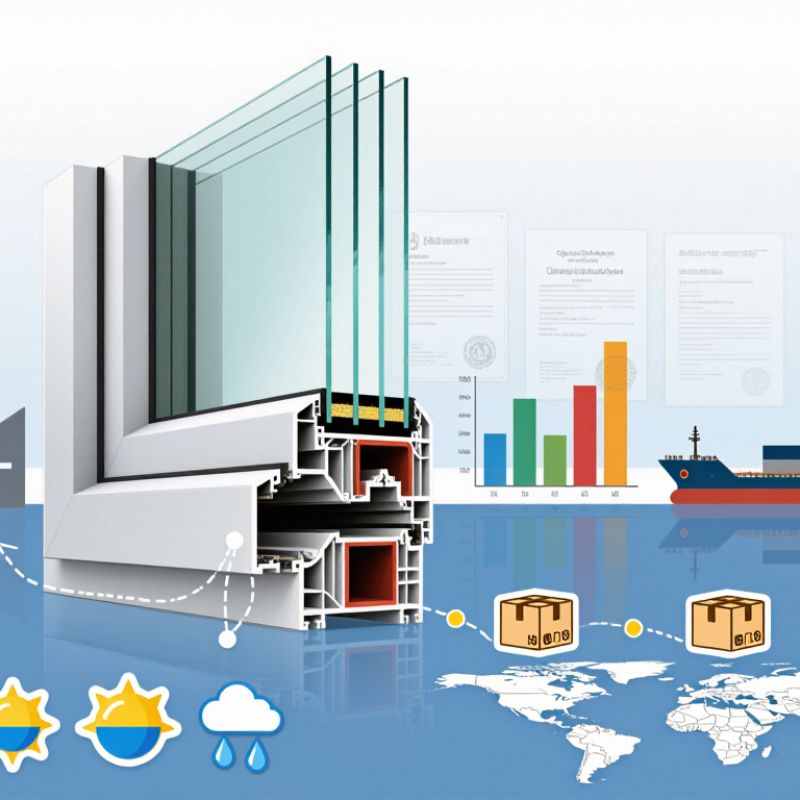
Many suppliers also provide tempered or laminated panes, tinted glass, and custom shapes. These options can address impact risk, glare, privacy, or façade design, but they are not interchangeable. Ask for performance data tied to the exact glass composition, including U-value, visible light transmission, and sound ratings where relevant. A catalogue alone is not enough. Request drawings and a sample corner section to inspect the spacer, seals, and edge finish.

Services may include design review, production inspection records, export packaging, and shipment coordination. Confirm lead times, minimum order quantities, warranty terms, and damage-claim procedures before placing an order. For a project, compare test reports from accredited laboratories and check that each report covers the proposed unit. I would not assume every stated rating applies to every size. Large panels may perform differently. Keep a written specification, since small changes in coating or cavity width can affect results. A little caution helps.


Key Criteria for Evaluating Supplier Quality

Supplier quality is more than a low quotation or a polished showroom sample. The U.S. Department of Energy reports that heat gain and loss through windows account for 25–30% of residential heating and cooling energy use. That makes verified thermal performance a practical buying criterion. Ask for product-specific test reports showing U-factor, solar heat gain coefficient, and air leakage—not just broad claims about “energy saving.” Check that report dimensions, glass build-up, and frame type match the product being quoted.

Look for evidence from qualified, independent testing, and confirm that the standards fit the destination market. Insulating glass units should have documented checks for seal integrity and moisture resistance; frame corners, drainage paths, and hardware deserve close inspection too. Details matter. Request batch inspection records and traceability from raw materials to finished units. A certificate alone may not tell you how consistently a factory controls daily production.

Factory audits can reveal calibration schedules, staff training, and how rejected units are handled. Ask how the supplier manages packaging, transit damage, and replacement parts, then review warranty terms in writing. I would not treat one showroom sample as decisive; it cannot demonstrate batch consistency. Compare recent test reports with samples from ordinary production, and clarify who pays for retesting if specifications change. That extra step can feel slow, but it reduces the risk of buying performance that exists only on paper.

Types of Leading Double Glazing Manufacturers

China’s leading double-glazing manufacturers generally fall into four types. Integrated glass processors make insulated glass units, controlling the spacer, desiccant, sealant, and gas fill under one roof. Their strength is production consistency. Ask for edge-seal durability and moisture-penetration test results, not just a low quoted U-factor. Details matter.

Window-and-door system fabricators combine glass with frames, hardware, and installation. They are useful when project teams need a complete, tested assembly. Specialist insulated-glass makers focus on custom pane sizes, acoustic laminates, or low-emissivity coatings.

Facade contractors, by contrast, coordinate larger curtain-wall packages and site installation. Each type has limits. A capable glass plant may not manage installation well.

The Global Status Report for Buildings and Construction 2023, published by UNEP and the Global Alliance for Buildings and Construction, estimates that buildings account for 34% of global energy demand and 37% of energy- and process-related CO2 emissions. That context makes verified thermal performance important, though glazing alone cannot determine a building’s energy use. Request recent third-party test reports, declared glass build-ups, and checks on production batches. Also confirm whether stated values apply to the glass alone or the full window. This distinction is easy to miss, and supplier paperwork can be less clear than it should be.

How to Compare Suppliers by Products and Services

When comparing double glazing suppliers in China, match the product specification to your project before comparing prices. Ask for the glass build-up, frame material and depth, spacer type, hardware details, and stated thermal or acoustic performance. Check whether test reports describe the same configuration you are being quoted. A report for different glass or frame components may not predict your result. Ask for evidence. Details matter.

Service quality is just as important as the window itself. Request a written quotation with clear inclusions, production lead time, packaging method, and shipping terms. Confirm who checks dimensions and how changes are recorded after approval. For installation support, ask whether the supplier provides drawings, fitting guidance, or remote technical help. Answers should be specific, not only reassuring. A polished brochure can still leave gaps, and I would not treat it as proof.

For custom orders, request a sample corner or a small mock-up when practical. Inspect the seals, frame joints, glass edges, and hardware movement by hand. It will not reveal everything, but it can expose finish or assembly issues early. Compare how each supplier handles a defect report: ask what evidence they need, who pays for replacement parts, and how quickly they respond. Some details may remain uncertain until production, so record assumptions in writing.

How to Verify a Supplier Before Placing an Order

Who Are the Best Double Glazing Suppliers in China?
How to Verify a Supplier Before Placing an Order

A polished website is not proof of reliable production. Ask the supplier for a live video tour of the workshop, and check whether the machinery and production lines match your order. Request recent test reports for the specific glass configuration, including thickness, coating, and spacer details. A report for a different product may not tell you much. Compare the company name on the reports with the name on the quotation and sales documents.

Tips: Order samples before approving bulk production. Check the edge finish, sealant, frame alignment, and glass clarity in daylight. Ask who performs inspections, how defects are recorded, and what happens if a batch fails. Get clear answers in writing. Small details matter.

Before paying a deposit, confirm production capacity, lead time, packaging method, and who handles export arrangements. Ask for references from buyers with similar product needs, but verify them independently where possible. Set measurable acceptance criteria in the purchase agreement, such as dimensions, tolerances, and inspection stages. It is easy to focus on price and miss a vague quality clause; even experienced buyers can overlook this. A third-party pre-shipment inspection can provide an extra check, though it cannot replace clear specifications or ongoing communication.

Who Are the Best Double Glazing Suppliers in China? - How to Verify a Supplier Before Placing an Order

Use this supplier scorecard to compare candidates. The weights and screening thresholds below are suggested purchasing criteria, not claims about any particular supplier or universal industry requirements.

Evaluation dimension Weight How to verify before ordering Evidence to request Warning signs
Business identity and factory capability 15% Check the registered legal entity and business scope using official Chinese company-record channels. Confirm whether the quoted party manufactures the units or acts as a trading company. Arrange a live video walkthrough or independent factory audit. Business licence, factory address, production-line overview, audit report if available, and confirmation that the contract and payment beneficiary match the contracting entity. Unexplained differences between the seller, factory, contract party, and bank beneficiary; refusal to show production or provide verifiable registration details.
Product specification and configuration 15% Compare the quotation and drawings against a written specification for pane thickness, glass type, cavity width, spacer, gas fill (if specified), coatings, dimensions, tolerances, and edge details. Itemized quotation, approved shop drawings, product data sheet, and a signed specification identifying every option and any permitted substitution. A price quoted without a complete build-up; vague descriptions such as “standard glass”; undocumented changes after sample approval.
Applicable standards and test documentation 15% Identify the rules and product standards required in the destination market. Verify that reports cover the quoted product configuration, are current where required, and come from a laboratory or certification body whose status and scope can be checked. Full test reports and certificates, including report number, tested construction, test method, issuing body, and scope. For insulating glass, ask whether testing addresses the applicable market requirements, such as relevant EN 1279 parts where required. A certificate image without a verifiable report number; reports for a different product build-up; claims of compliance without identifying the applicable standard or market.
Quality control and traceability 15% Ask how incoming glass, processing, assembly, sealing, inspection, and packing are controlled. Check whether production batches can be traced to inspection records and whether defects are recorded and addressed. Quality-control plan, sample inspection checklist, batch or order traceability example, nonconformance procedure, and any relevant quality-management certificate verified with its issuer. No documented inspection stages; no link between product labels and production records; reliance on unsupported statements such as “zero defects.”
Samples and pre-shipment inspection 10% Approve a representative sample or first-article unit against agreed drawings and specifications. Set inspection criteria and agree whether an independent inspector may check the goods before shipment. Dated sample approval record, inspection checklist, measurement results, photographs, and a written procedure for handling failed inspections. Production starts before specifications are approved; sample differs from the bulk order; the seller rejects reasonable, contractually agreed inspection access.
Lead time and production planning 10% Request a written schedule covering drawing approval, material preparation, production, inspection, packing, and dispatch. Confirm how changes, delays, and partial shipments are handled. Order-specific production schedule, stated lead-time assumptions, shipment plan, and contract terms describing delay notifications and remedies. Guaranteed delivery dates without a production plan; unclear start date; lead time excludes approval or inspection without being disclosed.
Export packing and transport readiness 10% Review the proposed packing method for the glass size, route, handling, and container loading plan. Confirm shipping marks, moisture protection where appropriate, and responsibility for damage claims under the agreed delivery terms. Packing specification, loading photos or plan, package dimensions and weights, shipping marks, and a written explanation of the agreed Incoterms® rule and named place. No packing details; unclear allocation of freight, insurance, or risk; carton or crate dimensions omitted from the shipping plan.
Commercial terms and after-sales support 10% Review the contract for product scope, payment milestones, change control, warranty coverage, claim deadlines, replacement or credit remedies, and dispute arrangements. Confirm the payment account independently before transferring funds. Signed contract, pro forma invoice, warranty terms, written claim procedure, and verified beneficiary details matching the agreed contracting arrangements. Large advance payment without suitable safeguards; vague warranty exclusions; last-minute bank-detail changes sent only by email or messaging app.
Total suggested weighting 100% Score each criterion consistently, record the evidence checked, and resolve critical compliance or payment concerns before placing an order.